In brief
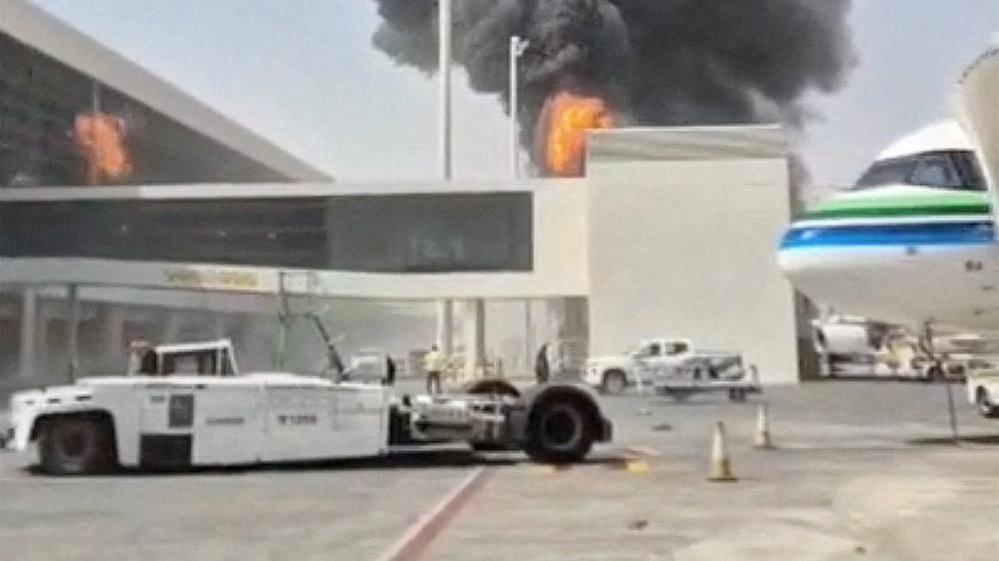
The State Department has ordered several diplomats and their families to depart Saudi Arabia following a wave of Houthi‑backed drone and missile strikes that killed three civilians and hit strategic sites. The orders come as the conflict between Yemen’s Houthi movement and Saudi Arabia spirals, with the Houthis targeting airports, oil facilities and military bases. A recent strike on King Fahd International Airport injured eight people and set fire to the terminal, while a drone wrecked at a Shaybah oil field killed two crew members. The U.S. warning highlights the potential for rapid escalation as the Houthis continue to confront Saudi operations.
The U.S. State Department has instructed non‑emergency employees and their families stationed in Saudi Arabia to leave the Kingdom immediately. The decision follows a series of Houthi‑backed drone and missile attacks that have killed three people and damaged critical infrastructure.
According to the Saudi oil ministry, debris from a drone intercepting an attack on a Shaybah oil field near the UAE border killed two crew members. The government also confirmed that the King Fahd International Airport in Dammam was struck, killing one person and injuring eight others, ranging from minor to serious wounds.
The view of the confrontation: Yemen’s Iran‑supported Houthi rebels have escalated their campaign against Saudi Arabia in the full month prior, launching missiles and drones at airports, energy facilities and military bases. Their recent attack on Riyadh’s international airport stands as the deadliest incident in the kingdom in recent years.
An official statement from U.S. interests in Saudi Arabia read, “The hostilities have the potential to scale rapidly.” The measure comes after multiple airports were hit by Houthi forces, prompting the State Department to reassess the safety of its personnel.
The broader context traces back to Yemen’s civil war that erupted when the Houthis ousted the government from Sanaa in 2014. The conflict intensified in 2015 when a Saudi‑led coalition intervened to restore the ousted leadership. Although an informal ceasefire had held since 2022, it unraveled in July after the Houthis proclaimed a maritime embargo on the Bab al‑Mandab Strait and resumed attacks on Saudi targets.
The bloc’s embargo and Houthi attacks have contributed to the spike in global oil prices, as Saudi Arabia relies heavily on Red Sea shipments after the Strait of Hormuz was closed during the intensified U.S. and Israel war with Iran.
Prospects for de‑escalation remain uncertain as the Kingdom urges international partners to bolster defensive measures and the Houthis continue to threaten critical infrastructures.