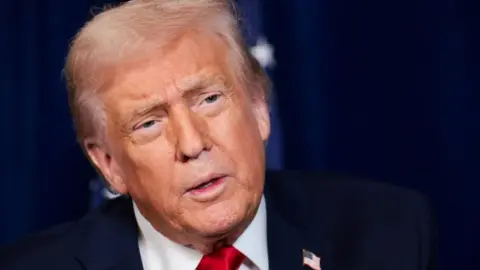
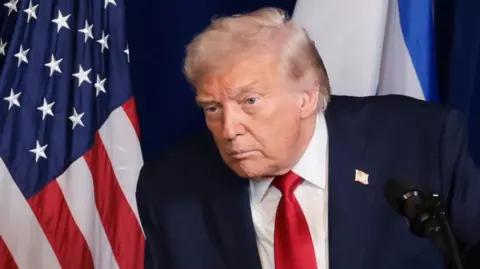
WASHINGTON (RTW) — President Donald Trump has issued the first vetoes of his second term, rejecting two bipartisan bills in a move that some analysts interpret as political retaliation against lawmakers who have opposed him on significant issues.
On Tuesday, Trump vetoed legislation concerning a drinking water pipeline from Republican Rep. Lauren Boebert of Colorado and another bill that aimed to give the Miccosukee Tribe of Indians of Florida increased control over tribal lands.
This latter bill surfaced amid ongoing litigation between the tribe and the administration regarding an immigration detention center in the Everglades, termed 'Alligator Alcatraz' due to its controversial nature.
Both bills previously garnered bipartisan support, with little indication of controversy until Trump's veto announcement fell late Tuesday evening.
In a letter to Congress explaining his veto, Trump targeted the Miccosukee Tribe's opposition to immigration reforms, framing it within the broader narrative of his administration's policy agenda. He indicated that the tribe had stymied sensible immigration measures that he argued were favored by voters during his election.
Although Trump did not openly refer to Rep. Boebert in his veto of her drinking water project, he highlighted concerns regarding the financial implications of the proposed pipeline.
Boebert, who had previously allied with Trump but diverged in her support of the Epstein case file releases, expressed her discontent over the veto, suggesting it may reflect political retribution. I hope this veto isn't linked to any political retaliation aimed at holding accountable those who demand transparency, she shared. She reassured her supporters, stating, This isn’t over, and that she remained committed to her constituents' needs.
The Florida legislation was backed by Republican Rep. Carlos Gimenez, who previously received Trump's endorsement. However, Gimenez and the Miccosukee Tribe have yet to comment on the fallout from the vetoes.
As speculation swirls over the motivations behind Trump's vetoes, the White House avoided labeling them as punitive measures, instead emphasizing Trump’s rationale as outlined in his communications.
In Congress, members have the opportunity to override presidential vetos with a two-thirds majority, but it remains uncertain if sufficient Republican support exists to do so, especially during the run-up to midterm elections where many GOP members rely on Trump's backing.
Trump's veto about the Finish the Arkansas Valley Conduit Act, which sought to enhance clean drinking water access in eastern Colorado, has left bipartisan co-sponsor Rep. Jeff Hurd disappointed. He stated that Trump's veto disregards a long-standing federal initiative aimed at improving drinkable water access for southern Colorado communities.
While the bills currently face setback, discussions on bipartisan collaborations and congressional unity become increasingly crucial as tensions rise within the party and the looming electoral pressures weigh heavily on lawmakers.
___
This report was compiled from various sources, including associated press releases and interviews with congressional representatives.