In brief
Newly battered Indiana faces a prolonged electric crisis: the storm that slammed Gary and surrounding towns on August 11 left more than 30,000 consumers without service over a week later. Residents, including elderly and low‑income households, have turned to friends, generators, and relief efforts such as the World Central Kitchen, while protests spark accusations against the local utility. The state government has demanded a federal disaster declaration, and power companies claim that restoration will reach full coverage by mid‑week. Experts warn that climate change is likely to increase the frequency of such outages, underscoring the need for resilient infrastructure.
Nearly two weeks after a damaging storm struck Gary and surrounding towns, residents are still living without electricity, raising concerns about basic needs and public safety.
77‑year‑old Terry Dubois has been relying on friends to bring her non‑perishable food and a power bank to keep her phone charged. Her son recently provided the bank, the only way she can stay in touch with the outside world. The heat, while tolerable so far, worries the elderly about cooling and refrigeration.
The storm, which hit the U.S. Midwest on August 11, produced flooding and tornadoes, with wind gusts topping 99 mph in Gary. Powersimplified; the intense storm lasted only 5–10 minutes, yet damage has lingered 12 days later.
More than 345,000 customers have seen power restored since the event, but a NIPSCO survey reported still almost 30,000 apartments without electricity on Sunday morning. This outage has led to supermarkets, pharmacies and petrol stations running on backup generators, forcing many residents to cope with limited supplies.
The outbreak has mobilised global charity volunteers: the World Central Kitchen has stepped in to provide food to those cut off from grocery stores. In the industrial heartland of Gary the outage also strained essential services: some residents cannot refrigerate medication, a wheelchair user is forced to navigate stairs with a non‑operating lift, and street lights have gone out leaving roads black at night.
Local officials and community leaders have taken a stand. Residents filed a class‑action lawsuit against NIPSCO, alleging negligence for the fallen trees that brought down power lines. Meanwhile faith leaders held a protest outside a church, demanding that the company allocate all available resources and push for a faster federal disaster declaration to unlock emergency aid.
Governor Mike Braun has criticised the delays, insisting there is “no excuse” for extended outages. He requested a major disaster authorization from FEMA to accelerate aid, while urging the utility to bring more crews on the job.
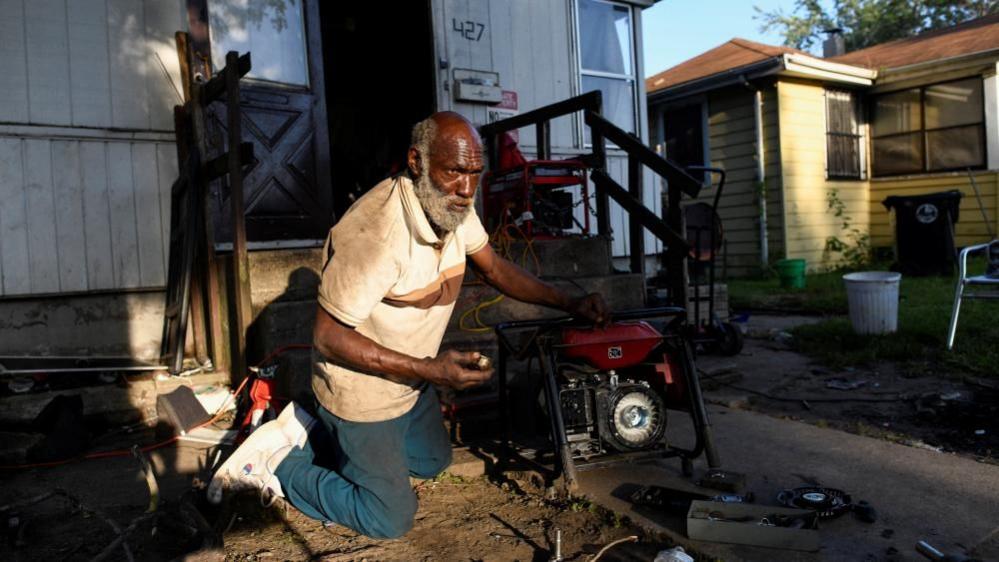
The long‑term outlook points toward a higher risk of such outages, with climate‑change experts warning of more frequent severe storms. For now, residents continue to adapt: some have set up generators; others use ice as a makeshift cooling method, as shown in the accompanying photo.