In brief
Following the Houthis’ statement banning vessels from Saudi ports, maritime data shows at least seven tankers made U‑turns near Yemen, diverting from the Bab al‑Mandab Strait. The Red Sea‑port corridor, vital for 15% of the world’s sea trade, is now threatened by the blockade and potential attacks. Analysts warn that a closure of the Strait could force Saudi oil to detour around Africa, inflating freight and consumer costs. The incident highlights escalating tensions between the Houthis and Saudi Arabia amid ongoing civil conflict in Yemen.
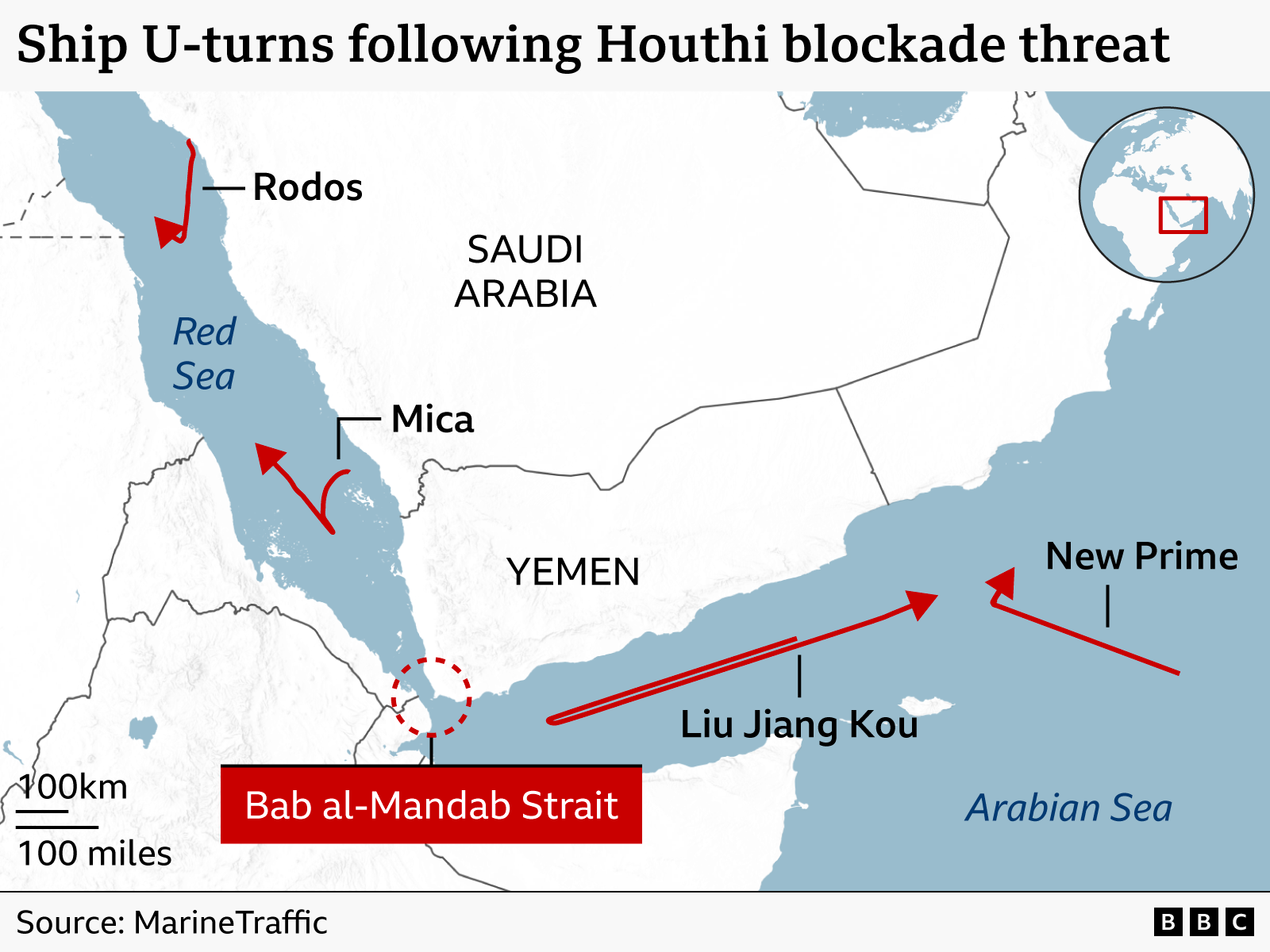
After the Iran‑linked Houthi militia announced a maritime embargo against Saudi Arabia on Monday, shipping data shows that at least seven crude‑oil tankers turned back, skirting the Bab al‑Mandab Strait rather than crossing into the Red Sea.
The vessels, originally bound to or originating from Saudi ports, made sharp course changes within hours of the embargo announcement. In addition to the tankers, other maritime traffic—including a vehicle carrier bound for Jeddah and a Hong Kong‑flagged oil tanker—also reversed direction mid‑journey, according to MarineTraffic.
The Red Sea is a critical choke point for global trade, the home of the Suez Canal and the Bab al‑Mandab Strait that connects the Mediterranean to the Gulf of Aden. The route now accounts for roughly 15% of worldwide sea traffic, with Saudi oil exporters increasingly relying on this corridor after the Strait of Hormuz was effectively closed in 2022.
Rooted analysts warn that a more restrictive Houthi strategy could force Saudi Arabia to route oil around the entire African continent, raising freight costs and pushing up consumer energy prices. “The impact of the blockade on consumers won’t be immediate yet, but higher energy costs are inevitable,” said Naveen Das, senior oil analyst at Kpler.
The EU naval mission Aspides has recommended that merchant vessels associated with Saudi, Israeli or U.S. interests avoid the Red Sea and Gulf of Aden until the threat level eases. Meanwhile, ships in the region have been broadcasting armed‑guard status to deter potential attacks.
The incident underscores a renewed flare in the long‑standing conflict between Yemen’s Houthi rebels and Saudi Arabia. Saudi officials have pledged to defend commercial shipping, while the Houthis continue to sustain an informant but tense truce that has recently faltered.