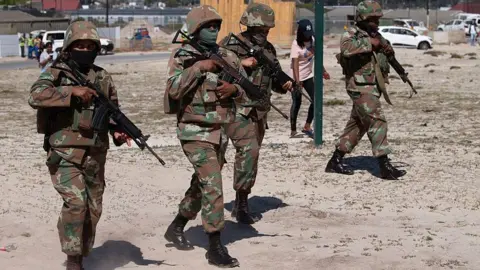
In a decisive move to combat escalating gang violence and crime in South Africa, the army has been deployed to various hotspots across the nation. President Cyril Ramaphosa announced the deployment of 2,200 soldiers to tackle violent crimes, illicit mining, and gang activities that have overwhelmed local police forces.
The operation will focus on five provinces identified as crime-ridden, with an initial group of soldiers already in Gauteng since March. The larger cohort will operate in the Eastern Cape, Free State, North West, and Western Cape provinces starting from April 1, for a duration of one year.
While officials emphasize that the army's presence is essential for restoring order, critics caution against the military's involvement in civilian matters, arguing that historical precedents show that such actions rarely yield sustainable solutions. South Africa has one of the highest murder rates globally, with crime statistics indicating that approximately 71 people are killed each day.
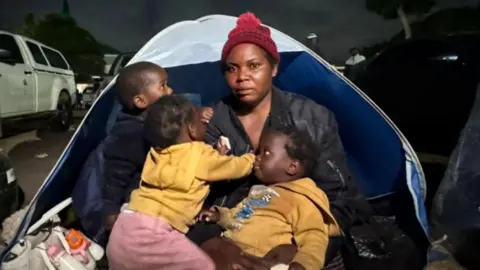
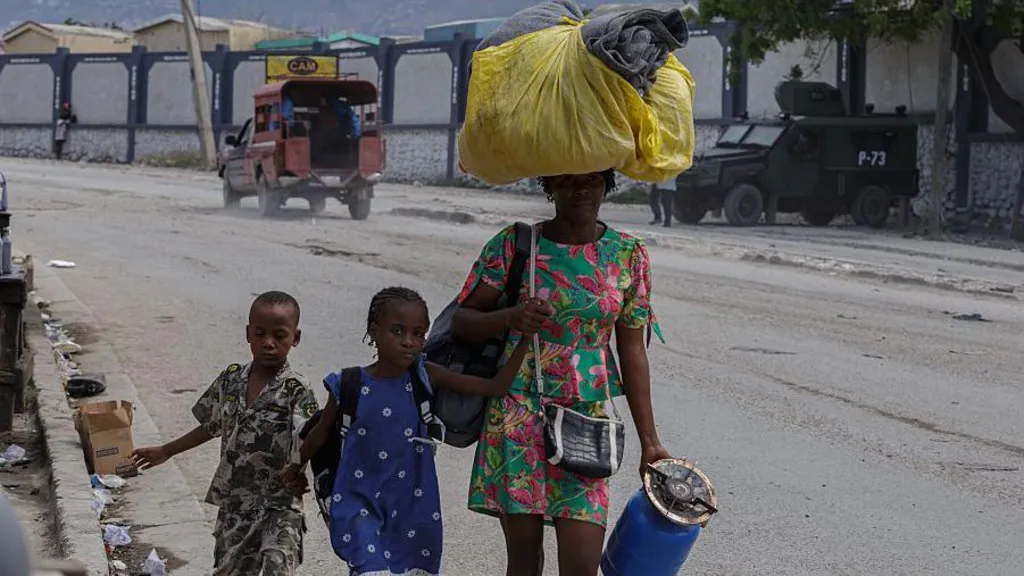
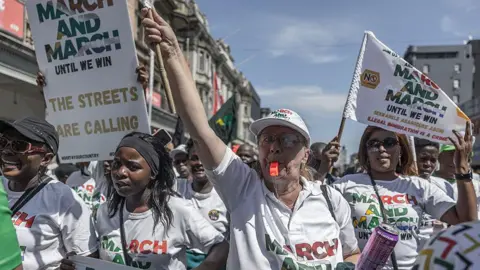
Residents of affected areas share mixed reactions to the deployment. While some express hope for greater safety, others remain skeptical, fearing that the military presence might only provide a temporary fix. For many, the struggle against gang violence is a daily reality that needs comprehensive strategies addressing deep-rooted social issues, not just military might.
As authorities lend their support, questions loom regarding the long-term effectiveness of deploying troops in urban areas riddled with complex social challenges. Experts warn that without addressing the root causes of crime, any gains achieved during this deployment may dissipate once soldiers withdraw.
The operation will focus on five provinces identified as crime-ridden, with an initial group of soldiers already in Gauteng since March. The larger cohort will operate in the Eastern Cape, Free State, North West, and Western Cape provinces starting from April 1, for a duration of one year.
While officials emphasize that the army's presence is essential for restoring order, critics caution against the military's involvement in civilian matters, arguing that historical precedents show that such actions rarely yield sustainable solutions. South Africa has one of the highest murder rates globally, with crime statistics indicating that approximately 71 people are killed each day.
Residents of affected areas share mixed reactions to the deployment. While some express hope for greater safety, others remain skeptical, fearing that the military presence might only provide a temporary fix. For many, the struggle against gang violence is a daily reality that needs comprehensive strategies addressing deep-rooted social issues, not just military might.
As authorities lend their support, questions loom regarding the long-term effectiveness of deploying troops in urban areas riddled with complex social challenges. Experts warn that without addressing the root causes of crime, any gains achieved during this deployment may dissipate once soldiers withdraw.