In brief
Skyroot Aerospace has successfully launched its Vikram‑1 rocket from the ISRO facility at Sriharikota, sending the vehicle to Low Earth Orbit in 16 minutes. The launch marks the first time an Indian private company has achieved an orbital flight, positioning Skyroot as the nation’s leading space‑tech unicorn. The rocket carried a mix of scientific payloads, a robotic arm, and symbolic items such as a lab‑grown diamond lotus and miniature sculptures of science icons. CEO Pawan Kumar Chandana says the company is pioneering a flexible, on‑demand launch model – a "cab service to space" – that could dramatically reduce launch wait times for small satellites worldwide. With plans to build more rockets monthly and to launch commercially next year, Skyroot aims to capture a substantial share of the growing global satellite market.
What if launching a satellite was as easy as calling a cab?
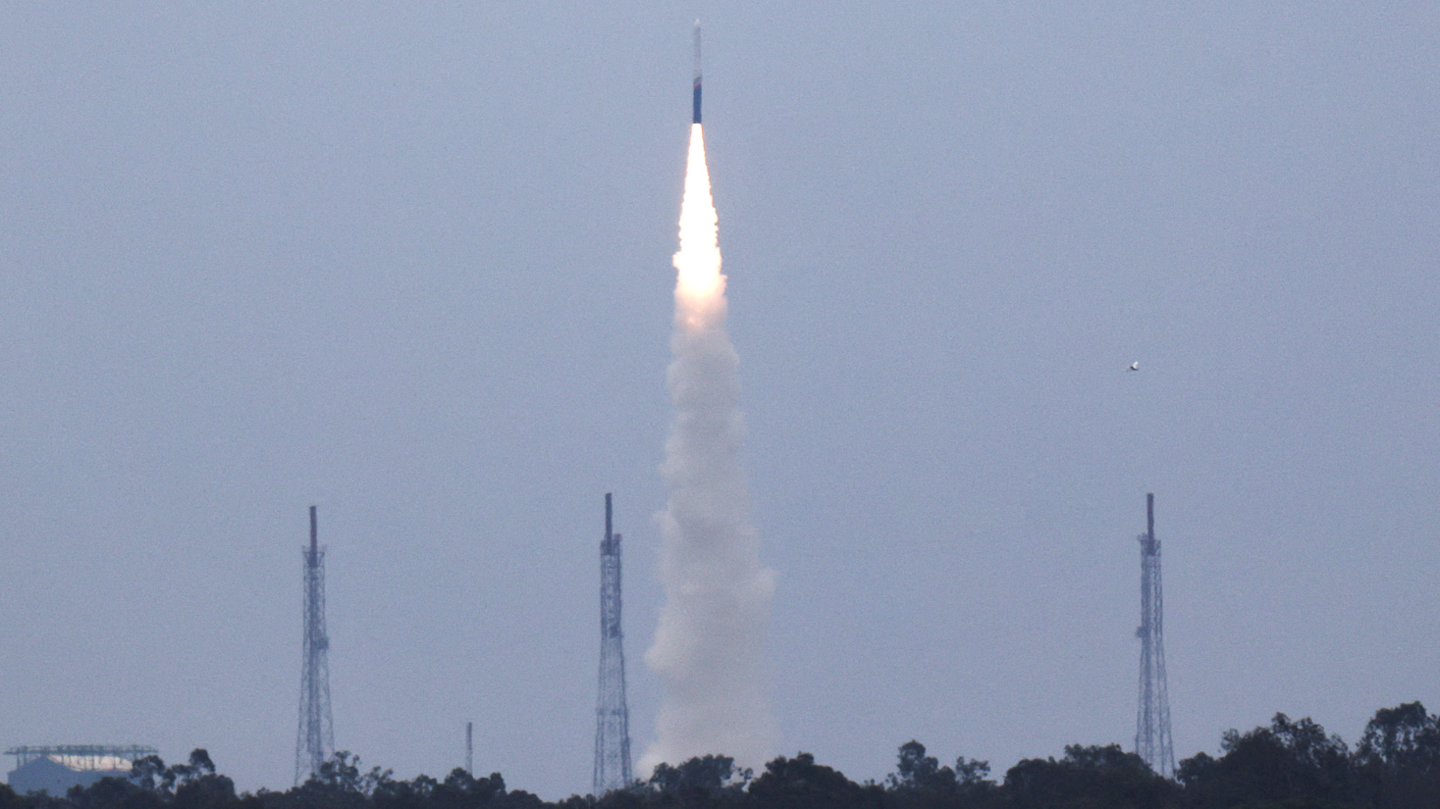
Skyroot Aerospace, India's first space‑tech unicorn, has made that vision a reality by lifting off its Vikram‑1 rocket at 12:05 h India time, reaching Low Earth Orbit in just 16 minutes.
The seven‑storey vehicle, named for Vikram Sarabhai – the father of India’s space programme – put a 350 kg payload into orbit. It carried six instruments, including a robotic arm for debris removal, an Earth‑observation camera, a German satellite, and symbolic pieces: a lab‑grown diamond lotus and tiny gold rockets of celebrated scientists.
"Vikram‑1 Test Flight‑1 has reached orbit… History is made," the company posted on X, announcing the milestone.
Skyroot’s goal is to offer a "cab service to space" – an on‑demand launch for small satellites, letting customers book a dedicated flight to a chosen orbit, rather than waiting for a shared slot on a larger rocket.
The launch, part of the Aagman mission, demonstrates the company’s model. CEO Pawan Kumar Chandana said the symbolic payloads honour pioneers CV Raman, APJ Abdul Kalam and Sarabhai, reflecting India’s legacy in space science.
Founded in 2018 by former ISRO engineers, Skyroot has grown to a 1.1 bn‑valuation unicorn. With India’s government opening the space sector to private firms in 2020, the company now plans to build one rocket per month at its Hyderabad factory and commence commercial launches next year.
Skyroot claims that 70‑80% of its market will be global, offering satellites for agriculture, fisheries, disaster management, communications and national security – a massive economic opportunity.
As India eyes future missions to Mars, Venus and its own space station, Skyroot’s flexible launch service could play a pivotal role in expanding both domestic and international satellite networks.