In brief
Yemen's Iran‑backed Houthi movement has launched a series of missile and drone attacks on Saudi airports, killing dozens and forcing closures. Saudi energy minister Prince Abdul Aziz bin Salman has pledged a "serious" response to the assaults at the WPC Energy Congress in Riyadh. The attacks have prompted Qatar and Etihad Airways to suspend or cancel flights to and from Riyadh and Dammam, while the Saudi–led coalition claims to have intercepted further missiles. International leaders condemn the strikes as violations of civilian protection, adding pressure on both sides as tensions in the region rise.
Saudi Arabia's energy minister has vowed a "serious" response to the deadly attacks on the kingdom's airports and oil and gas facilities by Yemen's Iran-backed Houthi movement.
"The events of recent weeks are serious. Our response must be equally serious," Prince Abdul Aziz bin Salman told the WPC Energy Congress in Riyadh.
On Sunday, a Pakistani man was killed in an attack on a terminal at the capital's King Khalid International Airport. It came a day after a Houthi missile hit another terminal, killing 13 people and forcing its closure.
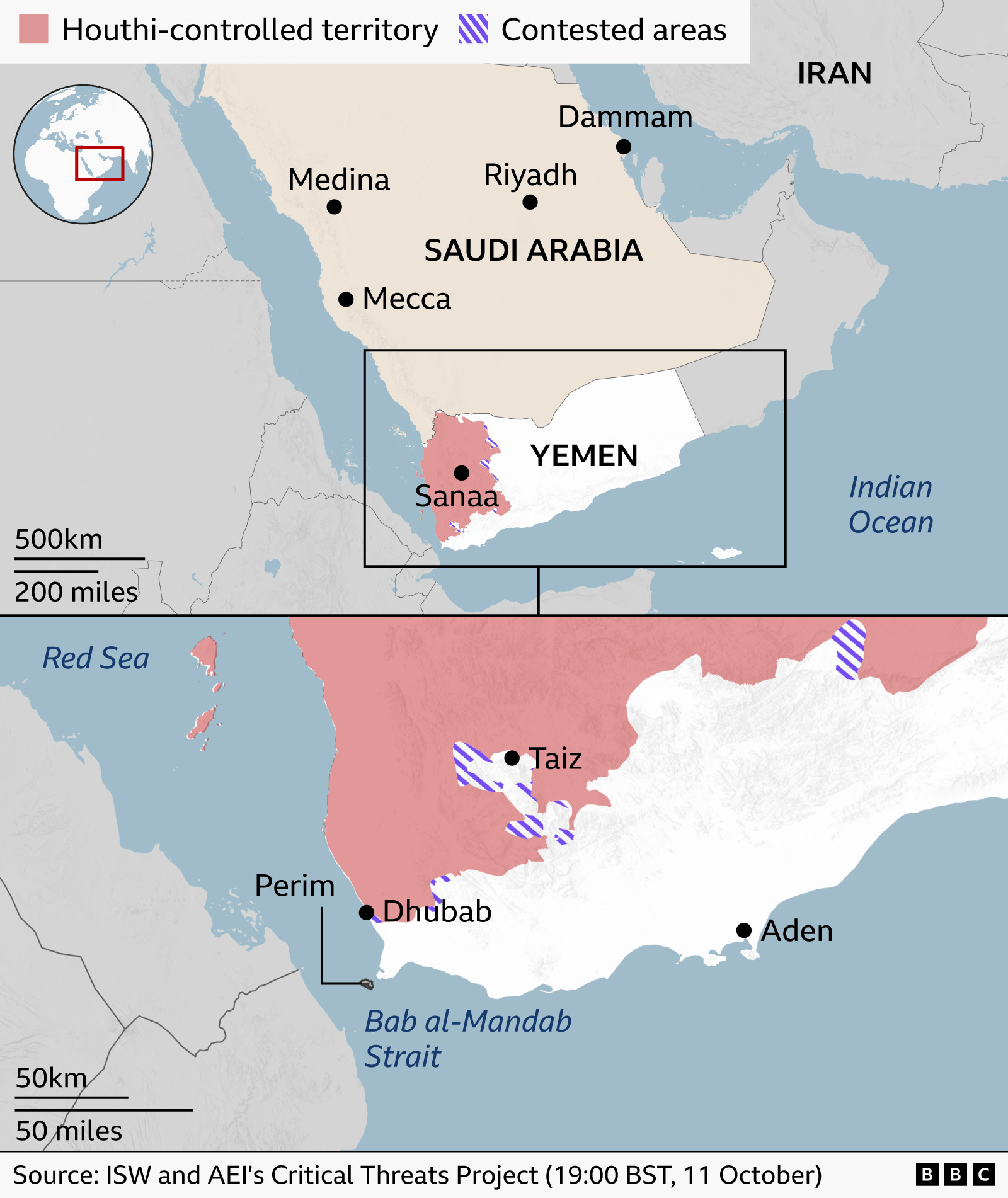
The Houthis said they launched the attacks in retaliation for "brutal Saudi aggression" against areas they control in western Yemen.
A Saudi-led coalition is providing air support for Yemeni pro-government forces battling the Houthis on Yemen's Red Sea coast and other areas.
Explosions were heard again in Riyadh on Monday night, with the Saudi-led military coalition saying a ballistic missile had been intercepted and destroyed.
A Houthi spokesperson said the group had again targeted the airport.
Meanwhile, Qatar Airways has said it will temporarily suspend flights to Riyadh and the north‑eastern city of Dammam.
Etihad Airways said it had cancelled flights between Abu Dhabi and Riyadh, Jeddah and Dammam due to "regional disruption".
King Khalid airport is expected to remain closed until Saturday.
Houthi military spokesman Yahya Saree said early on Tuesday that the Houthis had shot down what he described as a Saudi "reconnaissance drone".
The official spokesperson for the Saudi-led coalition said it had intercepted and destroyed "two ballistic missiles launched by the Houthis towards Khamis Mushait".
There was no immediate comment from the Houthis.
On Sunday evening, Houthi military spokesman Yahya Sarea said in a video statement that its forces had launched missiles and drones at Riyadh and Dammam's airports, as well as two oil and gas facilities in Eastern Province, in response to 124 Saudi air strikes in Yemen over the previous 24 hours.
Sarea also reiterated a warning to airlines and passengers against using Saudi airports and airspace, except for journeys to and from the Islamic holy cities of Mecca and Medina.
The Houthis' forces, he vowed, would "continue their escalating operations deep inside Saudi, imposing the equation of 'a blockade for a blockade' and 'an escalation for an escalation' and targeting Saudi enemy reinforcements until the aggression ceases and the siege on our dear people is lifted".
Saturday's attack on Riyadh airport drew widespread international condemnation. UN Secretary General António Guterres said he was "deeply shocked" and warned that attacks on civilians and civilian infrastructure were a violation of international law.