In brief
State-funded preschool enrollment has hit an all-time high of 1.8 million children, accounting for 37% of 4-year-olds in the U.S. This significant increase is attributed to California's 'transitional kindergarten' program, which alone contributed 25,000 new enrollments. Despite this progress, access remains uneven across the country, with many states falling behind. The National Institute of Early Education Research's annual report highlights that while some programs are thriving, others grapple with quality benchmarks and funding limitations.
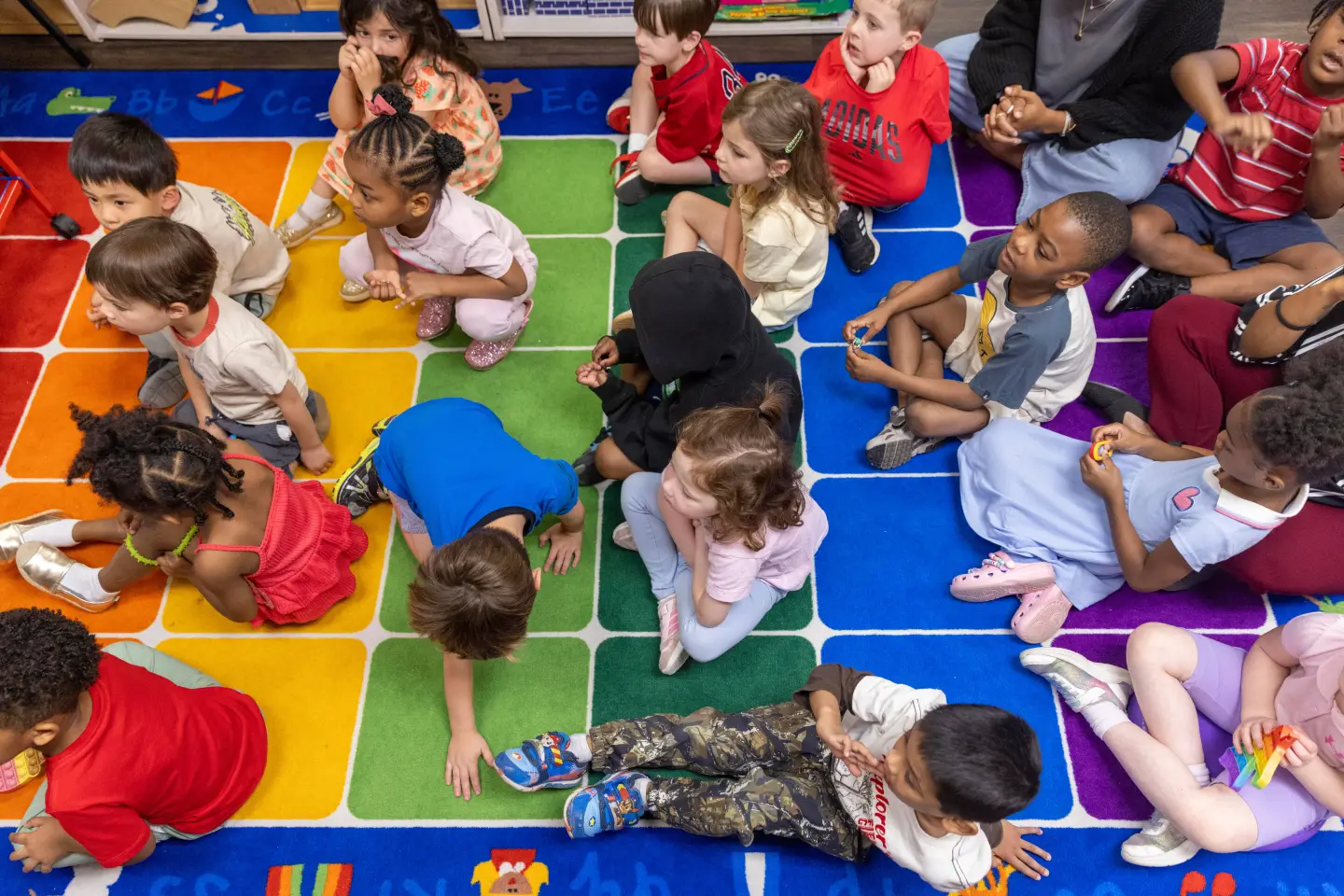
WASHINGTON (AP) — The number of 4-year-olds attending state-funded preschools reached record highs last school year, driven by states embracing universal access and significant investment in early education.
According to a report by the National Institute of Early Education Research, state-funded preschool enrollment in the U.S. rose to 1.8 million, representing 37% of 4-year-olds and about 10% of 3-year-olds. California accounted for a substantial portion of this growth, adding approximately 25,000 students to its 'transitional kindergarten' program.
Despite this improvement, the report highlights that preschool access across the nation remains highly uneven. As stated by the authors, If providing high-quality preschool education to all 3- and 4-year-olds were a race, some states are nearing the finish line, while others have stumbled and fallen behind. For instance, despite its gains, California met only two out of ten quality benchmarks set for preschool across the nation.
While some states have made significant advances, others still lack accessible options for families. For instance, many families in states with limited or no public preschool programs find themselves on waitlists or unable to afford private preschool tuition, which averages over $12,000 a year.
Evidence continues to show that high-quality preschool programs positively impact children's readiness for kindergarten and their long-term prospects, making early education an important focus for many states as they strive to balance accessibility with quality.
The report underlines the complexity of expanding preschool programs quickly, as some states succeed in meeting high-quality standards, such as Hawaii, while others struggle. The pressing inequities across states raise concerns about the future of early education, urging policymakers to invest in programs that ensure equal access to quality preschool education for all children.