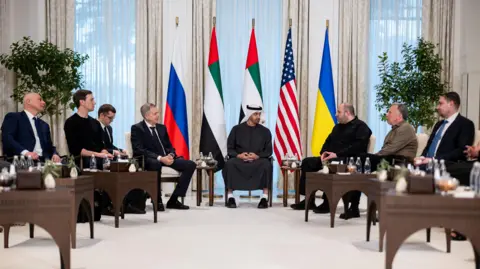
The first three-way peace talks between Russia, Ukraine, and the US have ended in Abu Dhabi with no apparent breakthrough, as fighting rages. Ukrainian President Volodymyr Zelensky raised the possibility of a second meeting as early as next week, while an American official said a new round would begin on 1 February.
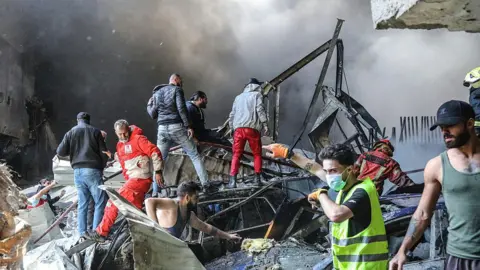
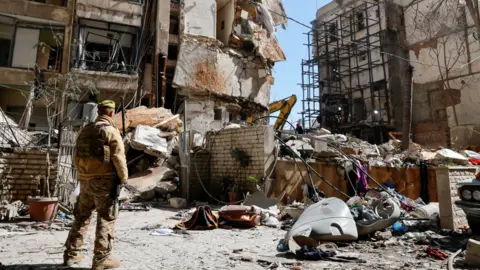
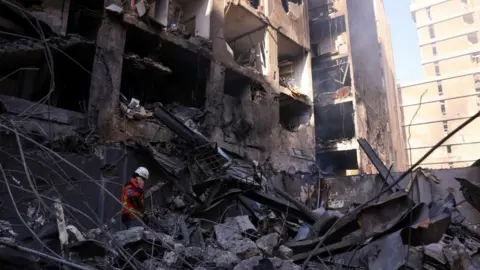
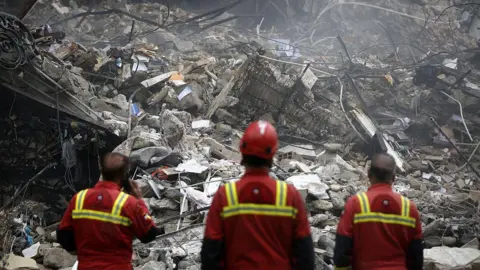
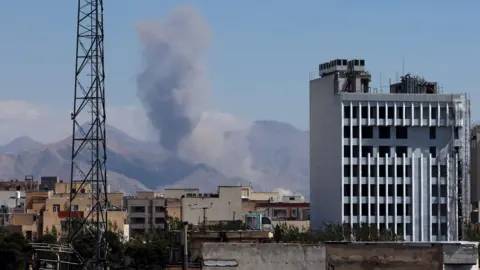
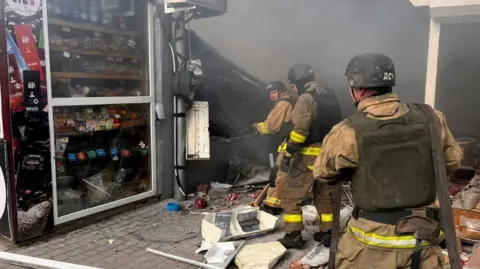
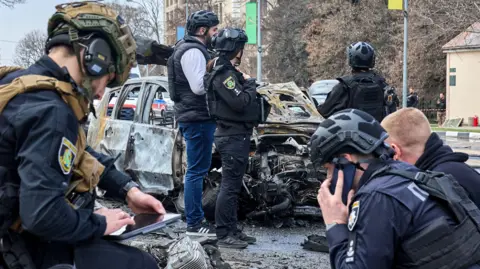
The two-day talks ended after waves of Russian air strikes targeted Ukraine's badly damaged energy infrastructure, killing one person and injuring 35 others, Ukrainian officials said. Russia accused Ukraine of attacking an ambulance in Ukrainian territory under its control, killing three medics. Later, it reported a Ukrainian missile attack on energy infrastructure in Belgorod.
The BBC could not independently verify the reports. The talks in Abu Dhabi were the first trilateral meeting since the Kremlin launched its full-scale invasion of its neighbor in 2022. The central focus of the discussions was the possible parameters for ending the war, Zelensky posted on X. I highly value the understanding of the need for American monitoring and oversight of the process of ending the war and ensuring genuine security.
All sides had agreed to report back to their capitals and coordinate further steps with their leaders. Zelensky added that the next round of talks would begin next Sunday in Abu Dhabi again.
The Russian state news agency Ria-Novosti reported that Moscow remained open to a continuation of dialogue with Ukraine and the US. US President Donald Trump stated that Putin had accepted an invitation to join his Board of Peace, focused on ending global conflicts, but this remains unconfirmed.
Vitali Klitschko, the mayor of Kyiv, reported casualties from recent airstrikes, indicating the continuing humanitarian toll amidst ongoing dialogues. As the winter months advance, with temperatures plummeting, energy infrastructure in Ukraine remains a focal point of conflict with both sides trading accusations of violence against civilians.
In a statement, Ukrainian Foreign Minister Andrii Sybiha condemned the Russian assaults as brutal and adequate proof that negotiations are hindered by ongoing violence. As military activities continue, the prospects for peace remain tenuous and challenging.
The two-day talks ended after waves of Russian air strikes targeted Ukraine's badly damaged energy infrastructure, killing one person and injuring 35 others, Ukrainian officials said. Russia accused Ukraine of attacking an ambulance in Ukrainian territory under its control, killing three medics. Later, it reported a Ukrainian missile attack on energy infrastructure in Belgorod.
The BBC could not independently verify the reports. The talks in Abu Dhabi were the first trilateral meeting since the Kremlin launched its full-scale invasion of its neighbor in 2022. The central focus of the discussions was the possible parameters for ending the war, Zelensky posted on X. I highly value the understanding of the need for American monitoring and oversight of the process of ending the war and ensuring genuine security.
All sides had agreed to report back to their capitals and coordinate further steps with their leaders. Zelensky added that the next round of talks would begin next Sunday in Abu Dhabi again.
The Russian state news agency Ria-Novosti reported that Moscow remained open to a continuation of dialogue with Ukraine and the US. US President Donald Trump stated that Putin had accepted an invitation to join his Board of Peace, focused on ending global conflicts, but this remains unconfirmed.
Vitali Klitschko, the mayor of Kyiv, reported casualties from recent airstrikes, indicating the continuing humanitarian toll amidst ongoing dialogues. As the winter months advance, with temperatures plummeting, energy infrastructure in Ukraine remains a focal point of conflict with both sides trading accusations of violence against civilians.
In a statement, Ukrainian Foreign Minister Andrii Sybiha condemned the Russian assaults as brutal and adequate proof that negotiations are hindered by ongoing violence. As military activities continue, the prospects for peace remain tenuous and challenging.