In brief
Despite criticism regarding the United States' inadequate response to the recent earthquake in Myanmar, US Secretary of State Marco Rubio defended the government's position, citing a need for other countries to share the responsibility of humanitarian aid.
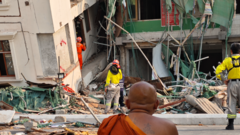
The article text:In the wake of the catastrophic earthquake in Myanmar that has claimed over 3,000 lives, US Secretary of State Marco Rubio has responded to criticisms regarding the US's limited humanitarian contribution. During an interview with the BBC, Rubio dismissed allegations that the Donald Trump administration's disbanding of the United States Agency for International Development (USAID) hindered American rescue efforts. He stated, "We are not the government of the world," emphasizing a balanced approach to global humanitarian assistance that also respects US national interests.Former USAID officials expressed concern that the agency's dismantling meant the US could not deploy rescue teams or essential equipment as swiftly as it has in the past. According to reports, the normal response includes sending teams of up to 200 rescue workers, along with trained dogs for search and rescue missions. However, Rubio indicated that logistical constraints and the challenging political landscape, including Myanmar’s military regime, complicate US involvement.He acknowledged that the state department was sending advisors to the region but maintained that many other wealthy nations, including China and India, should also take on significant humanitarian responsibilities. "There's a lot of other rich countries in the world, they should all be pitching in," he urged. Furthermore, Rubio pushed back against critiques from humanitarian aid experts, who noted that the cuts to USAID made it difficult for substantial US support to arrive. He criticized how distributed funds were previously managed, indicating a shift toward collaborating with more streamlined and efficient NGOs on the ground.As news of the earthquake broke, the White House reportedly sought to activate a Disaster Assistance Response Team (DART) but faced logistical issues tied to budget cuts that resulted in the cancellation of crucial contracts and staff layoffs. Rubio defended the administration’s decision to limit foreign aid spending, aligning with former president Trump’s sentiment that foreign assistance was inconsistent with American values.Despite the challenges, Rubio reaffirmed the US's willingness to assist in the ongoing humanitarian crisis, pointing out the necessity for a collective response from the international community.