In brief
NASA has approved an unprecedented rescue effort to keep its Swift gamma‑ray burst telescope aloft. The private venture Katalyst Space Technologies launched the three‑armed LINK craft to latch onto Swift and lift it back into stable orbit. The mission faces high risk, as Swift is now drifting down to 220 miles before it burns up. If successful, the operation could herald a new era of on‑orbit servicing for future space telescopes.
NASA launches mission to save falling space telescope
NASA has launched a robotic spacecraft to intercept and rescue its Swift observatory, which has been slowly spiralling towards Earth due to solar‑induced atmospheric drag.
Swift, a 2004 launch that has catalogued the universe’s most violent explosions, now sits at just 220 mi (360 km) altitude, a dangerous descent that could see it burn up in the atmosphere by the end of the year.
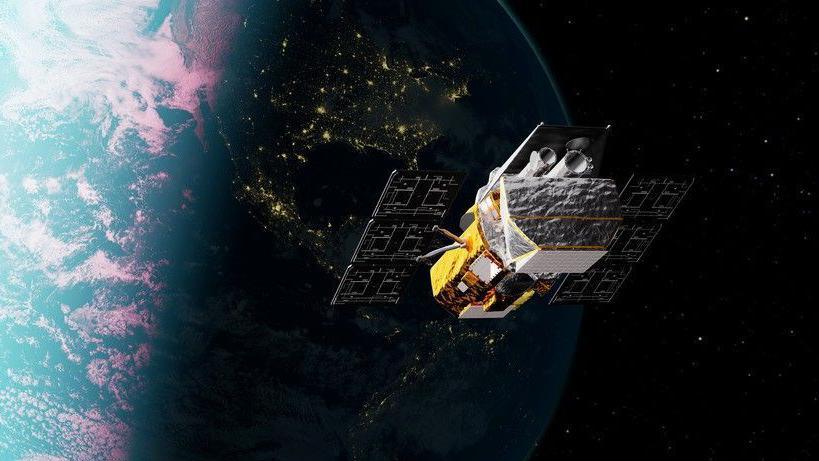
Katalyst Space Technologies, based in Flagstaff, Arizona, built the LINK craft, a three‑armed robot about the size of a fridge, in under eight months. The company will use the Pegasus XL to launch LINK on Friday, hoping to rendezvous with Swift before it crosses the 186 mi (300 km) threshold.
The LINK spacecraft will first perform a series of systems checks, then close in on Swift, using its cameras and sensors to map the telescope’s exact position in spite of Swift’s altered shape after two decades of orbit.
If the capture is successful, LINK will attach its robotic arms, lift Swift and gradually raise its orbit back to the original 373 mi (600 km) range, giving it a safe few more years of operation.
Dr. Simeon Barber, a senior research fellow at the Open University, praised the effort: “NASA thinks it’s worth a go, and the scientific community is hopeful because Swift is irreplaceable for studying high‑energy cosmic events.”
The mission is untested and carries significant risk, but success could pave the way for future rescue operations, perhaps of the famed Hubble Space Telescope.
Stay tuned for updates as LINK rehearses, courts the falling Swift, and pushes the limits of orbital rescue technology.