In brief
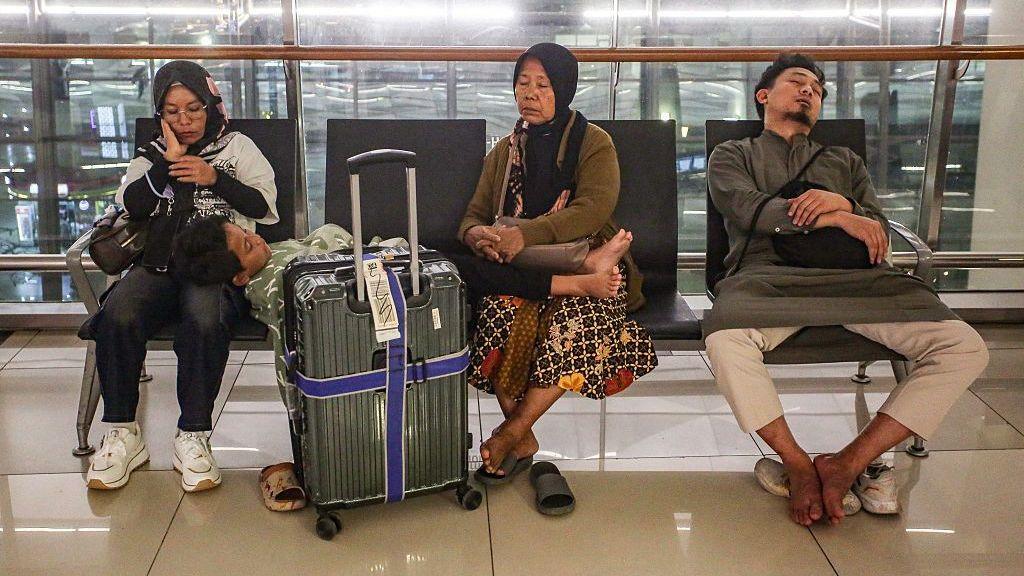
A sudden eruption of Mount Anak Krakatoa on the Sunda Strait threw ash into the air near Jakarta’s Soekarno‑Hatta International Airport, prompting the suspension of more than 200 flights. Roughly 22,000 passengers were stranded as airlines grounded planes to and from Singapore, Doha, Sydney and Kuala Lumpur. Authorities confirmed no tsunami threat but urged residents to stay indoors and wear masks to prevent exposure to ash particles. The aviation sector remains on standby, awaiting further instructions from the Ministry of Transportation.
Stranding thousands of passengers, the volcanic ash from Anak Krakatoa prompted hundreds of flight suspensions at Indonesia’s largest airport, Soekarno‑Hatta, on Sunday.
The Ministry of Transportation announced that 209 flights were halted when ash clouds were detected in the airspace surrounding the airport. The pause extends until 13:30 (0630 GMT) and mainly affects routes to and from Singapore, as well as international connections to Doha, Sydney and Kuala Lumpur.
Anak Krakatoa erupted late on Friday night, producing seismic tremors, lava fountains and booming sounds. Two additional eruptions followed early on Sunday, intensifying the ash plume that threatens air travel.
Authorities have issued no tsunami warning, though they urge residents near the volcano to stay indoors and wear face masks to protect against the respiratory, eye and skin hazards posed by ash.
The volcano, a “child of Krakatoa,” has remained sporadically active since it rose from the sea in the early 1900s within the crater formed after the historic 1883 eruption.
Indonesia’s position on the Pacific Ring of Fire endows it with frequent volcanic and seismic activity, making it essential for continuous monitoring of such natural events.