In brief
Research shows that increasing female entrepreneurship could significantly elevate women's contributions to the economy.
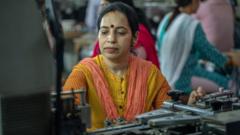
In India, women's participation in the workforce hovers around 17% of the GDP, a stark contrast to the global average. A new study reveals that fostering female entrepreneurship could be a game-changer for elevating women's workforce presence. According to data from the World Bank, despite women accounting for half of the global population, they own less than a fifth of businesses worldwide.The situation in India illustrates a complex challenge. Over the past three decades, the female workforce has stagnated, but entrepreneurship, while low, is witnessing slightly better figures. Approximately 14% of Indian entrepreneurs are women, mainly leading micro, small, and medium enterprises (MSMEs), contributing significantly to labor and industrial production. However, most are single-person businesses, limiting their overall economic impact.Interestingly, while female-owned businesses employ many more women than male firms—only 23% of employees in male-owned businesses are women—only 6.5% have a female at the helm. A recent paper from researchers Gaurav Chiplunkar and Pinelopi Goldberg highlights that promoting female-owned businesses can create networks that boost women's workforce participation.The study identified various barriers that women face in entering the labor market and launching entrepreneurial ventures. High costs hindering female entrepreneurs from expanding their businesses and limited access to childcare significantly restrict their employment opportunities. Additionally, traditional household responsibilities still fall predominantly on women, making it challenging for them to participate in the labor force.Policies aimed at enhancing female entrepreneurship could be crucial in addressing these disparities. Supporting female-led businesses can create more jobs and higher incomes, ultimately leading to economic growth—research indicates India could achieve an 8% GDP boost if women comprise a significant part of the workforce by 2030.Despite minor increases in female labor participation recently, the landscape remains largely unpromising. Many women are now entering self-employment but still face discrimination and community resistance, which may limit their success. The focus on female entrepreneurship, therefore, becomes an essential step towards fostering a more inclusive and economically empowered future for women in India.