In brief
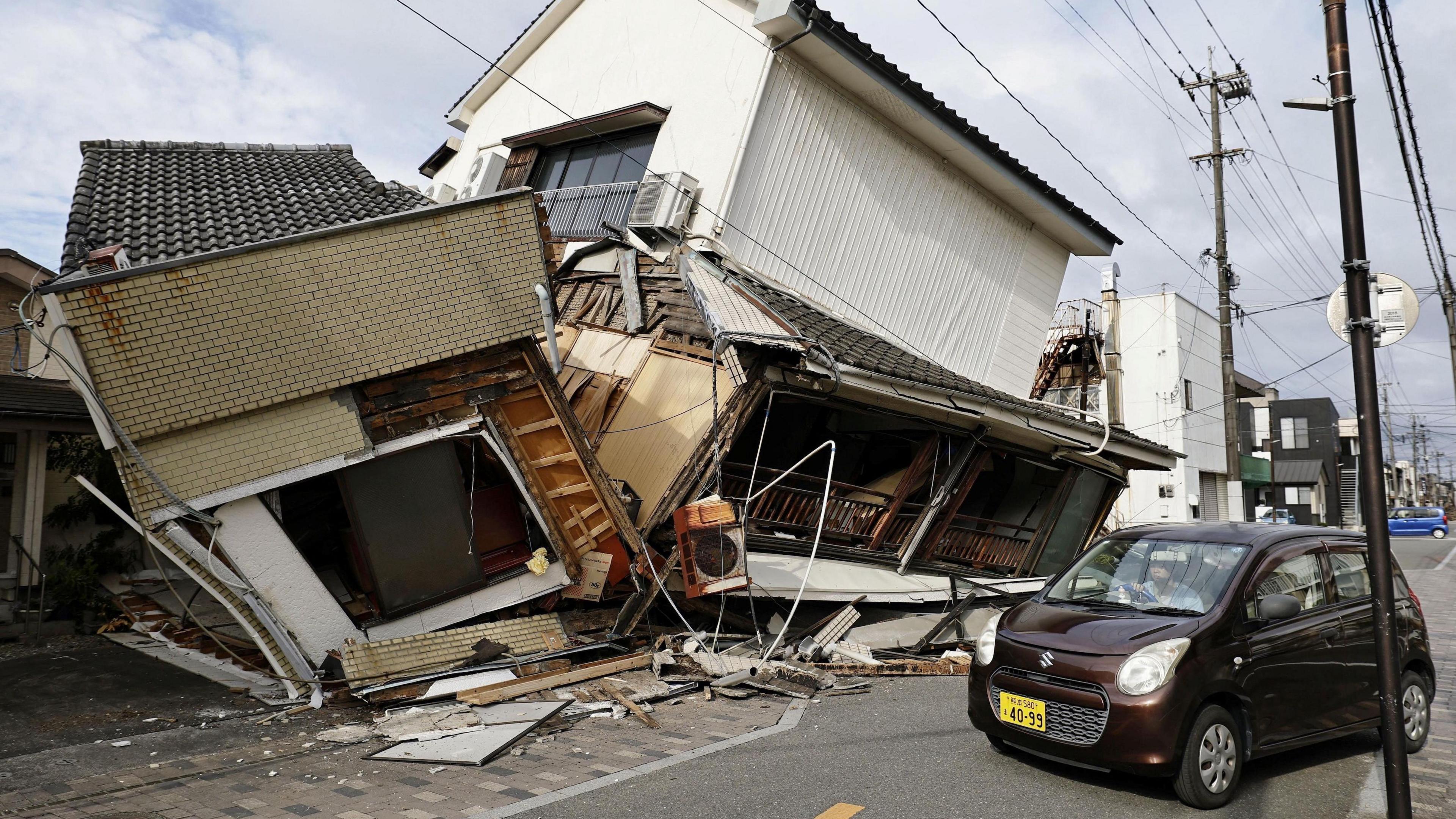
The 6.8‑Magnitude earthquake that struck Kumamoto late Tuesday disrupted life in the city and its surroundings, killing at least 13 people and leaving many buildings damaged. Residents such as Hiroko Ogata, a 75‑year‑old co‑owner of a local diner, described the shock as terrifying, while others like Yui, who runs a cake shop, found themselves suddenly trapped by aftershocks that stopped the business in its tracks. Rescue teams, led by Prime Minister Sanae Takaichi, have dispatched thousands of personnel to the area, but infrastructure remains crippled, with power and water outages widespread and historic landmarks partially destroyed. The city continues to battle the twin challenges of physical reconstruction and psychological trauma, as experts warn that another quake may follow. Residents and officials hold on to hope that the disaster will eventually be tempered by the city’s resilience.
A business that was winding down for the day at Sendan Shokudo, a diner in the southwestern Japanese city of Yatsushiro, suddenly lurched as the 6.8‑magnitude earthquake slammed into Kumamoto. Many kitchen items fell and shattered, and 75‑year‑old co‑owner Hiroko Ogata grabbed a table for protection, only to feel it swing violently left and right. “I was surprised, and scared,” she said to BBC News. “I went under a table right away,” and she added that the quake moved to the side, left, right, left again in rapid succession.
Yatsushiro lies on an active tectonic fault system and has faced violent quakes before, most notably the 2016 double‑event that killed 277 people. Still, Ogata says, she had never felt a jolt this large before. “The last quake 10 years ago was nothing like this one,” she recalled. “I thought I would die.”
Intrag city, the shock has killed at least 13 people, including three from the Aeon shopping mall in Kumamoto city, where dozens remain trapped. Rescue teams are underway while Prime Minister Sanae Takaichi warns that emergency services are in a race against time.
Yui, a 25‑year‑old cake shop owner who was in the back office when the quake struck, told BBC News, “I couldn’t tell the sound of the quake from the sound of the explosion.” She clung to a chair in the face of repeated jolts, describing the experience as beyond fear—she “doesn’t know how to feel.” Additional aftershocks ripple through the area for hours, leaving residents on high alert.
Local residents like Michal Posan complain of a total lack of water or food, as the quake broke TVs, mirrors, and roads. “The TV fell on me, my mirror shattered, and the roads around me were damaged,” she said. She has started preparing evacuation bags amid constant aftershocks.
The authorities have mobilised 4,600 personnel to work through the night, while thousands have lost power and water. Damage extends to historic landmarks, with the exterior walls of Kumamoto Castle partially collapsing and Yatsushiro Shrine’s worship hall fully destroyed.
Recovering from this disaster remains painful and slow. “The whole of my place is messy, and I don’t know where to stand,” Ogata recounts as she cleans the diner. She admits that after each small step, an aftershock stops her, making progress incremental and stressful.
Yui’s bakery remains closed as she evaluates equipment damage before re‑opening. Together, residents like Ogata and Yui work tirelessly to restore normality amid both the physical devastation and the lingering fear of additional quakes.