In brief
As protests escalate, the Georgian government's decision to pause European Union membership discussions sparks a national crisis, raising questions on the country's political alignment.
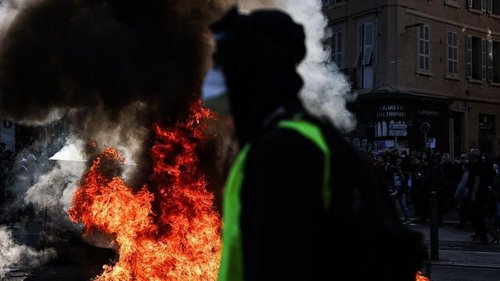
Thousands of Georgians have gathered outside the parliament in Tbilisi for the fifth consecutive night, protesting against the government's recent announcement to suspend plans for European Union membership until 2028. These demonstrations reflect a growing political divide in the country, as citizens clash with the pro-Russian administration led by the Georgian Dream party. President Salome Zourabichvili, a strong advocate for closer ties with the West, has publicly supported the protestors, asserting their right to express their desire for a European future. "We want our European destiny to be returned to us," she declared in an interview with France’s Inter Radio. The protests, which began last Thursday, have not only captured the capital’s attention but have also reverberated across cities nationwide, indicating widespread dissatisfaction with the current government’s policies.In sharp contrast, Prime Minister Irakli Kobakhidze has rejected negotiations with opposition members and denounced the protests, claiming they are being "funded from abroad." "I remind everyone that there will be no revolution in Georgia," he stated during a press conference, further escalating tensions in a nation divided over its geopolitical stance. As the crisis unfolds, the future of Georgia's aspirations for European integration remains uncertain, with citizens voicing their frustrations vehemently against a backdrop of political resistance.