In brief
Recent archaeological findings at Brusselstown Ring suggest that the first towns in Ireland may have been established during the Late Bronze Age, challenging the existing belief that the Vikings were the first to build towns on the island. The excavation led by Dr. Dirk Brandherm has unveiled over 600 suspected houses, making it the largest known prehistoric settlement in Ireland to date.
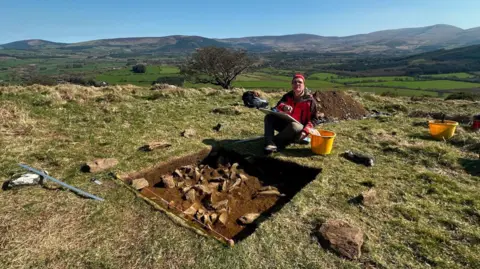
A recently discovered large hilltop settlement could challenge the theory that the Vikings built the first towns in Ireland, a researcher has said.Dr. Dirk Brandherm and his colleagues have identified more than 600 suspected houses in the Brusselstown Ring making it the largest nucleated settlement discovered in prehistoric Britain and Ireland.The settlement, thought to have emerged around 1200 BC, is located within the Baltinglass Hillfort Cluster in the Wicklow Mountains. This discovery raises significant questions about the timeline of urban development in Ireland.Dr. Brandherm, a reader in prehistoric archaeology at Queen's University Belfast, highlighted the importance of the settlement due to the concentration of roundhouses and complex architecture suggesting an organized community rather than small hamlets, as previously believed.The findings were published in the journal Antiquity, emphasizing the unique characteristics of the settlement. Researchers initiated test excavations in 2024 to further investigate the site's development and potential functions, which may indicate that Brusselstown was a proto-town, existing centuries before Viking influence.Brandherm notes that the discovery of a cistern, the first of its kind in Ireland, alongside the multitude of roundhouses, further complicates the narrative surrounding the origins of urban centers on the island.The ongoing research promises to shed more light on the social and economic structures of this prehistoric community and its implications for our understanding of Ireland's early history.