In brief
A moderate‐intensity hurricane that skirted Hawaii’s Big Island has unleashed heavy rain and swift currents, ravaging homes, uprooting trees, and disabling power to nearly 200,000 residents. Despite not making landfall, Lala’s 35‑inch rainfall has triggered mudslides in coastal villages, and one driver lost his life in a vehicle accident. Emergency responders are scrambling to locate survivors while National Guard troops assist with recovery. The storm, currently a tropical disturbance, still threatens further rain across all eight islands. Longer‑term climate trends, including an El Niño warmer than average, may increase the frequency of such powerful near‑shore cyclones.
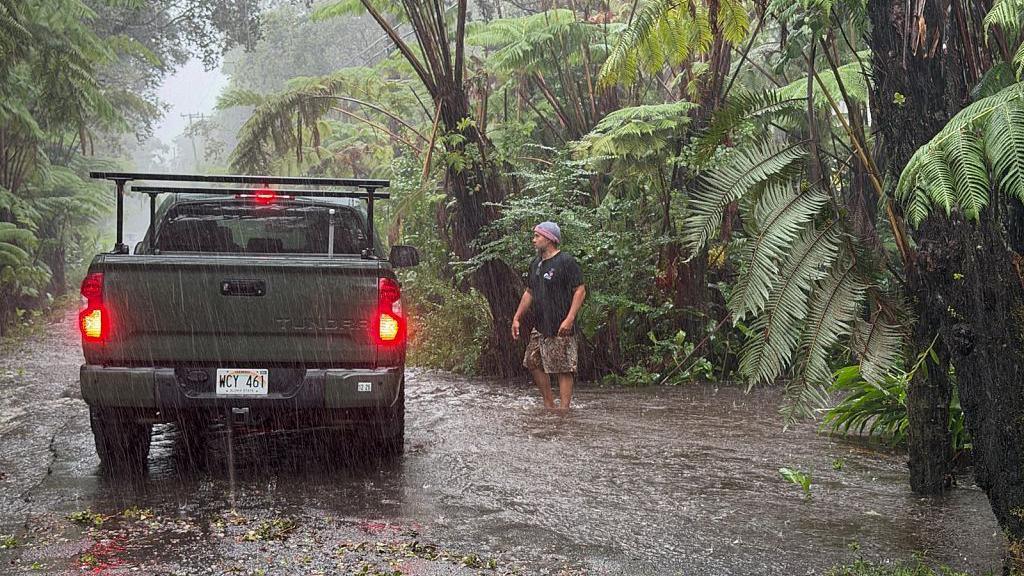
Hawaii is grappling with the after‑effects of Hurricane Lala, a Category 1 storm that did not make landfall but slammed the Big Island with up to 35 inches of rain, producing flash floods and destructive mudslides. One death was reported in a car crash, and search‑and‑rescue teams have been deployed to locate people stranded in storm‑damage zones.
The storm’s intense rainfall has uprooted and swept several homes out of their foundations in the coastal communities of Naalehu and Waiohinu, sparking a nationwide power outage that reached 219,000 households. Two hospitals have remained operational on backup generators, while three hospitals and a handful of airports—Hilo International and Ellison‑Onizuka Kona—were temporarily shut for safety. Flight operators have postponed or cancelled 190 flights since the storm’s arrival.
Lala’s winds, once a brisk 91 mph, have now decreased to roughly 65 mph, yet the storm still carries the potential for more rain across the islands. Officials warn that the Sierra Storm front may deliver an additional 4–8 inches of precipitation to the Big Island and windward Maui, and the rest of the chain could see 4–6 inches. The U.S. National Weather Service has issued tropical storm warnings for all eight major islands.
Around 180 National Guard troops and maritime teams have been mobilized to aid the response. The governor highlighted the complexity of rescue missions due to advancing tide lines, debris, and nighttime conditions, citing the “rush” and “dark” environment as obstacles. Authorities continue to monitor the storm’s trajectory as it drifts westward off the coast, remaining a looming threat as it weakens to a tropical disturbance.
Historically, Hawaii has suffered major hurricanes, including the 1992 Category 4 Iniki, which caused extensive damage and claims. Climate scientists note that a strong El Niño state—exacerbated by global warming—boosts sea‑surface temperatures, thereby potentially increasing both the frequency and severity of tropical cyclones that target the region. Local residents and officials alike must remain vigilant as the forecast holds a possibility of further flooding and wind damage.