In brief
For thirty years a frozen body named Green Boots sat near Everest’s summit, a grim warning for mountaineers. The body is now identified as 48‑year‑old Dorje Morup, one of six climbers who died in a 1996 expedition. Indian authorities are preparing a perilous but hopeful recovery operation that could return Morup’s remains to his family and provide closure. The mission will face extreme altitude, harsh weather, and logistical challenges, with costs between $40,000 and $80,000. If successful, DNA testing will confirm identity and the family plans a dignified funeral in Ladakh.
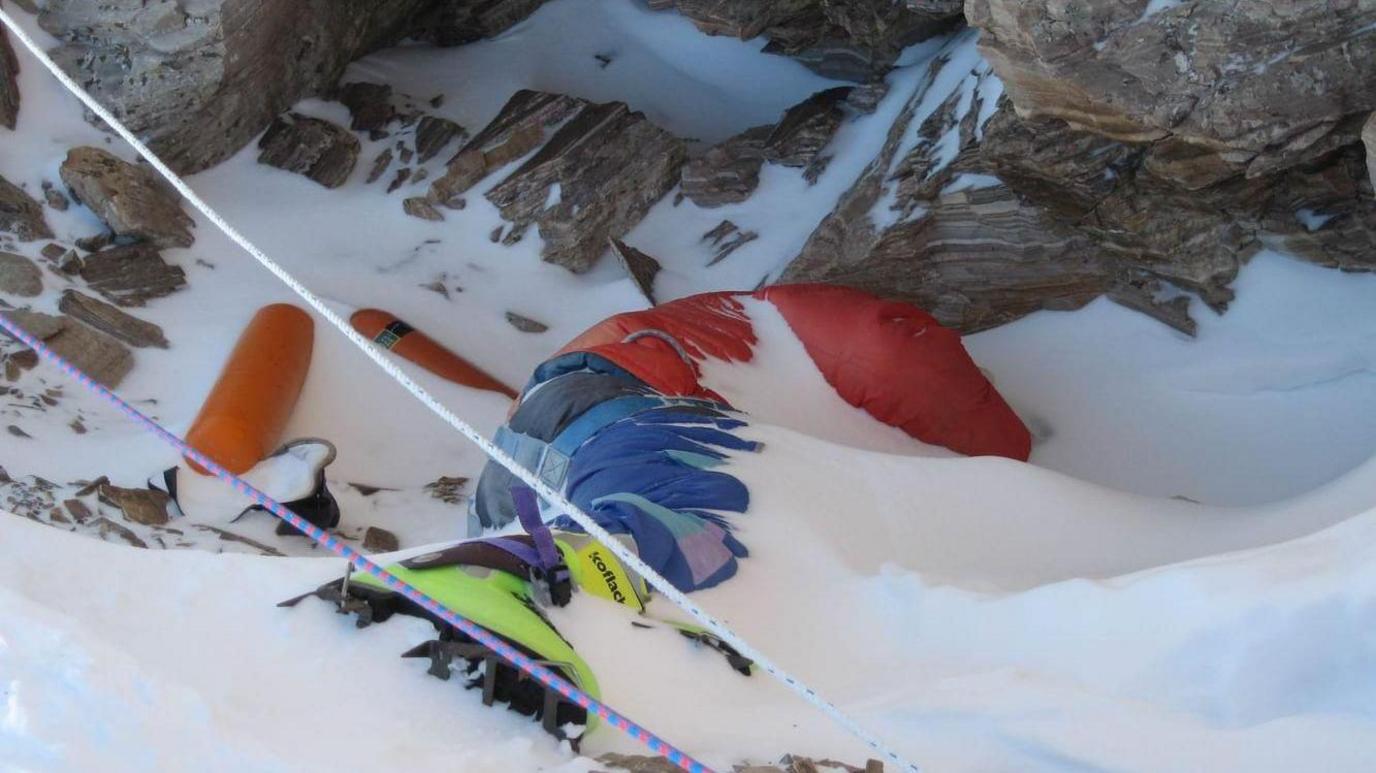
For thirty years a body known as “Green Boots” lay frozen beneath a rock near the summit of Mount Everest, a grim marker for climbers on the Chinese side of the mountain. The lime‑colored mountaineering boots were worn by Indian climber Dorje Morup, who died in a 1996 expedition that sought to summit Everest from the treacherous north ridge.
Morup’s wife, Yangskit, has said she could not believe her husband was dead because she never saw his body. The family in Ladakh has struggled with the loss for decades, holding rituals and keeping his memory alive through photographs and his summit certificate issued by the Chinese government.
Scientists and mountaineering experts now say the body is identified as Morup. An Indian Indo‑Tibetan Border Police (ITBP) official confirmed that Morup’s clothing and gear helped differentiate him from his teammates.
India is serious about recovering the remains. The government is assembling a high‑altitude rescue team that may operate between March and September. If the mission succeeds, the body will undergo DNA testing and be returned to Morup’s family in Leh for a proper funeral.
Recovering bodies from the “death zone” above 8,000 metres is extremely risky. Temperature can plummet to -40 °C and oxygen levels are about a third of sea‑level values. Sherpas warn that the terrain is steep and lacks the helicopter support found on the Nepalese side, making a descent dangerous for both climbers and rescuers.
Recovery costs could reach $80,000, far beyond the means of most families. However, the ITBP is determined to bring Morup home, hoping to provide closure and honor his legacy as a martyr for the country.
According to a senior ITBP official, “We never forgot him. It was only a matter of time.” The government’s plan is to locate the body in a 3‑km stretch, secure it, and carry it to a lower altitude where helicopters can take it. The body will then be transported to an airport and sent back to India.
Families and media have expressed cautious optimism. Morup’s eldest son, Punchok Dorjai, stated that the family will hold a funeral near Ladakh’s Martyrs Park and keep his “green boots” as a symbol of his legacy.
While many climbers preserve the grim marker in situ, the Indian government’s effort may distinguish the case of Green Boots as a story of resilience, closure, and the enduring human spirit in the face of endless violence and loss on the highest peaks.