In brief
Across the United States, various grassroots efforts are being initiated to tackle the increasing loneliness and disconnection felt by many Americans. With civic engagement and participation in community groups at historic lows, organizations from Baltimore to Kentucky are promoting social interaction, mutual assistance, and community repair. Initiatives like neighborhood gatherings, cooperative farming, and trauma-informed programs are aiming to rebuild social bonds and provide support systems. Experts, including former Surgeon General Vivek Murthy, highlight the urgent need for connection in healing communities.
Across the country, small groups are working to rebuild social connection amid rising loneliness.
It seems straightforward — building relationships. However, these groups are combating significant societal challenges.
Many metrics indicate that Americans are experiencing unprecedented social disconnections.
Fewer individuals are joining civic groups, clubs, and unions than in previous generations, with religious congregation memberships at their lowest in nearly a century. Recent surveys reveal Americans now have fewer close friends and reduced trust in each other, alongside diminished communal activities in public spaces such as cafes and parks.
Approximately one in six adults feels lonely most of the time; this figure rises to one in four among young adults.
While no single solution exists, various groups with different missions recognize the role of social disconnection in broader challenges, and are emphasizing reconnection as part of their strategies.
For instance, in Baltimore, a neighborhood is cultivating a culture of giving and mutual support, while in Pittsburgh, a ministry focuses on healing from the scars of poverty and violence. Meanwhile, in Kentucky, a cooperative assists small farmers to reinforce rural community strengths, and Ohio groups are striving to revitalize neighborhoods.
Former Surgeon General Vivek Murthy advocates for creating a movement centered on reconnection, saying, “The good news is that that movement is already starting to build.”
In 2023, Murthy published a report regarding an “epidemic of loneliness and isolation,” comparing it to past public health campaigns concerning smoking and obesity. He emphasized that loneliness entails significant health risks including heart disease and depression.
Building ‘Personal Connections’ in Akron
In Akron, Ohio, Murthy engaged with groups working toward community repair as part of the Knight Foundation-supported Together Project.
During discussions, leaders of the Well Community Development Corporation talked about fostering affordable housing and small businesses in an underserved neighborhood, promoting social activities like local gatherings and a community café.
One uplifting sign of reconnection: families in the area resumed trick-or-treating after several years of low community activity.
“That makes a significant impact,” stated Zac Kohl, director of The Well. “It’s not just about having a roof over your head; it’s about forming personal connections,”
On the other side of town, local leaders gathered in a community room overlooking Summit Lake, which has transformed from an overgrown area to a bustling hub for exercise and social interactions.
“It’s a strategic choice to encourage communication and interaction,” remarked Erin Myers, a development director, noting the importance of creating conducive environments for community bonding.
Neighbors Supporting Each Other in Baltimore
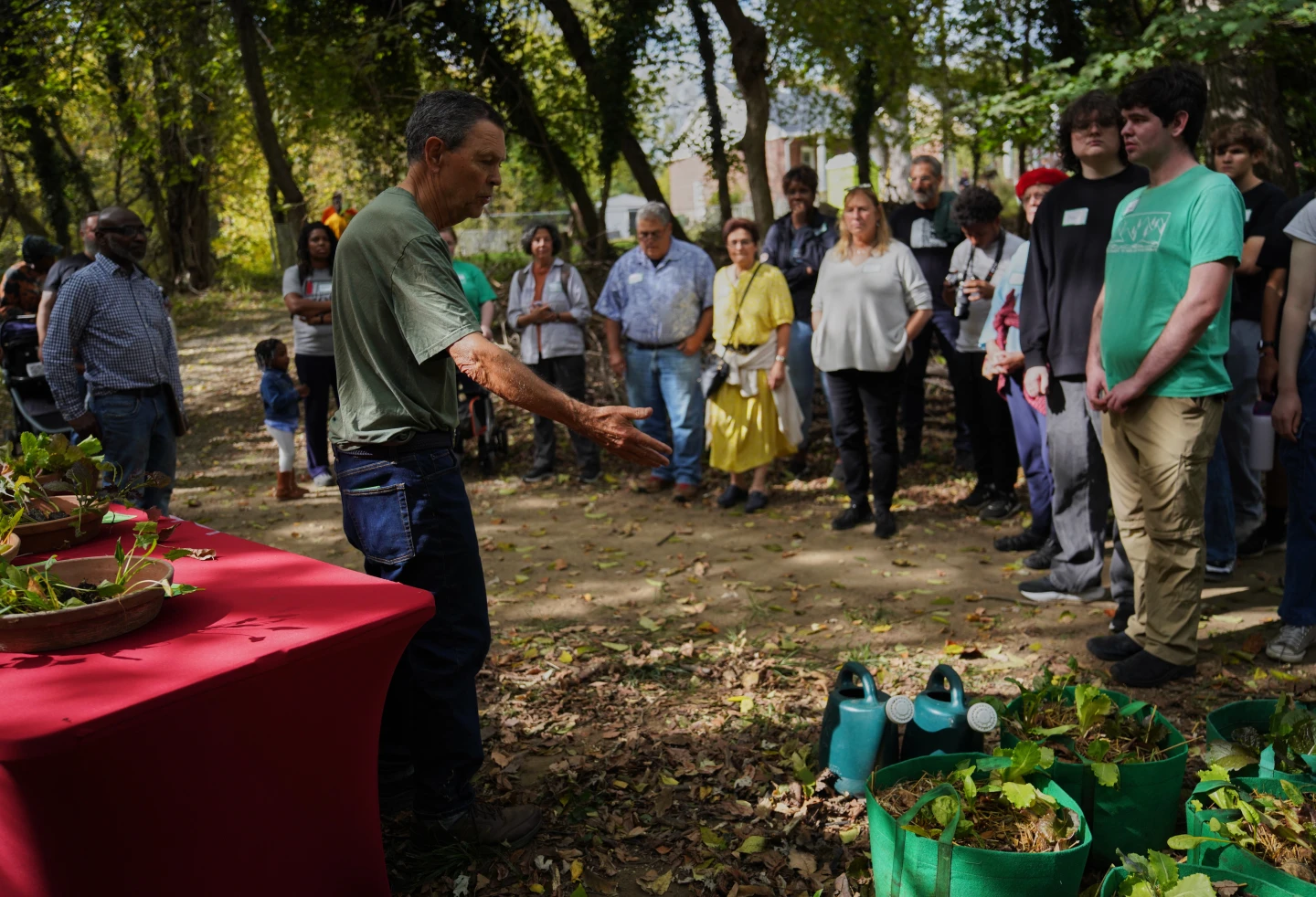
During an afternoon event in Baltimore, residents gathered for a community feast featuring a variety of dishes and enjoyed sharing their stories with neighbors.
Ulysses Archie led a walking tour explaining how his community has embraced backyard farming and environmental sustainability efforts.
The neighborhood has also developed a “Peace Park,” revitalizing an abandoned lot into a space for food distribution and children’s camps.
Archie emphasized, “Our focus is on relationship-building, both with each other and with nature.”
Connecting to the Land in Kentucky
In New Castle, Kentucky, a gathering celebrated local agriculture with music and food. Sponsored by a cooperative of local farmers who cultivate grass-fed cattle, the event also aimed to strengthen rural community ties and support for small farms.
Healing Communities in Pittsburgh
Pittsburgh’s Neighborhood Resilience Project focuses on community-building initiatives in historically underserved neighborhoods. This project offers health resources and emotional support, reflecting a growing recognition of isolation as a widespread issue affecting many demographics.