In brief
China’s authorities have pulled more than one million people from their homes in eastern China when Typhoon Dolphin struck The storm reached winds of up to 150 km/h, shattering transport networks and canceling flights in Shanghai. While the cyclone was officially downgraded to a tropical storm, officials warned of continued heavy rain, flooding, and landslides that could last until Wednesday. Flooded streets, stalled tourist sites and a still‑alive missing‑person case have drawn international concern, with the storm’s impact extending to the Philippines and Japan’s Okinawa. The large storm’s 6,000 km journey and powerful rains highlight the heightened risk of typhoons under a strong El Niño year.
More than one million Chinese residents were evacuated from their homes on Friday as Typhoon Dolphin made landfall along the eastern coast, including the financial capital Shanghai.
The storm slammed into Zhejiang’s Yuhuan at 17:30 local time on Sunday, then struck Wenzhou an hour later, packing maximum wind speeds of 150 km/h (94 mph). The heavy rain halted all major transport routes, and nearly 1,000 flights were canceled at Shanghai Pudong International Airport alone.
Despite its downgrade to a tropical storm, authorities issued a red alert and warned that torrential rains, severe flooding and landslide risks would continue through Wednesday as the cyclone moved northward. The storm is the strongest to hit China this year.
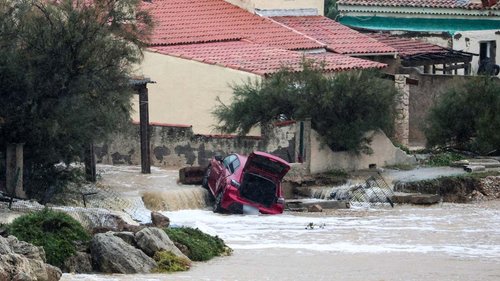
Crowded streets turned into puddles in Shanghai’s former French Concession, while the Lianjiang coast in Fujian faced huge waves. State media showed flooded ground‑floor businesses and people wading through ankle‑deep water.
In the flood‑plagued city of Wenzhou, authorities opened more than 1,000 emergency shelters for 900,000 displaced residents. A nine‑year‑old boy from Wenling was reported missing after being swept into the sea; no casualties have yet been officially confirmed.
Other regions were also affected: March–August saw parts of Zhejiang receive 250–500 mm of rain, Hangzhou waived parking fees for motorists seeking shelter, and Fujian maritime services suspended dozens of ferry routes and halted over 100 offshore construction projects.
The storm’s 6,000 km journey—more than three times the length of an average typhoon—demonstrated its massive circulation and rainfall capacity, according to CCTV, which highlighted the large storm’s potential to cause widespread damage.
Across the western Pacific, Dolphin also dropped heavy rains in the Philippines and Thailand, and crashed into Japan’s Okinawa island, where five elderly residents suffered non‑life‑threatening injuries. In Hong Kong, the typhoon recorded a peak temperature of 36.9 °C, marking a record warm day for the city.
The strong El Niño year is expected to nurture more intense tropical cyclones, raising global awareness that Typhoon season—usually from May to October—could bring increasingly destructive storms.