In brief
Late July saw 72,000 migrants flood Ceuta from Morocco, triggering a surge of unrest. Protesters blocked Red‑Cross aid and set migrant camps on Trampolin beach ablaze, leading to violent altercations with police. The Spanish government faces criticism over management of the crisis, while political parties accuse each other of stoking tensions. Ceuta’s fragile social fabric is under threat as migration and political divisions collide.
Ceuta, a Spanish exclave in North Africa, became a flashpoint for violence as thousands of migrants rushed across its border from Morocco in late July.
At least 72,000 people crossed within two days, many of whom swam around a border fence, and at least 100 lost their lives during the mass crossing, according to the municipality.
While most migrants returned to Morocco within hours, several thousand remained, largely children, sleeping rough on beaches and streets. The influx has strained public services and fueled local fears of an overrun city.
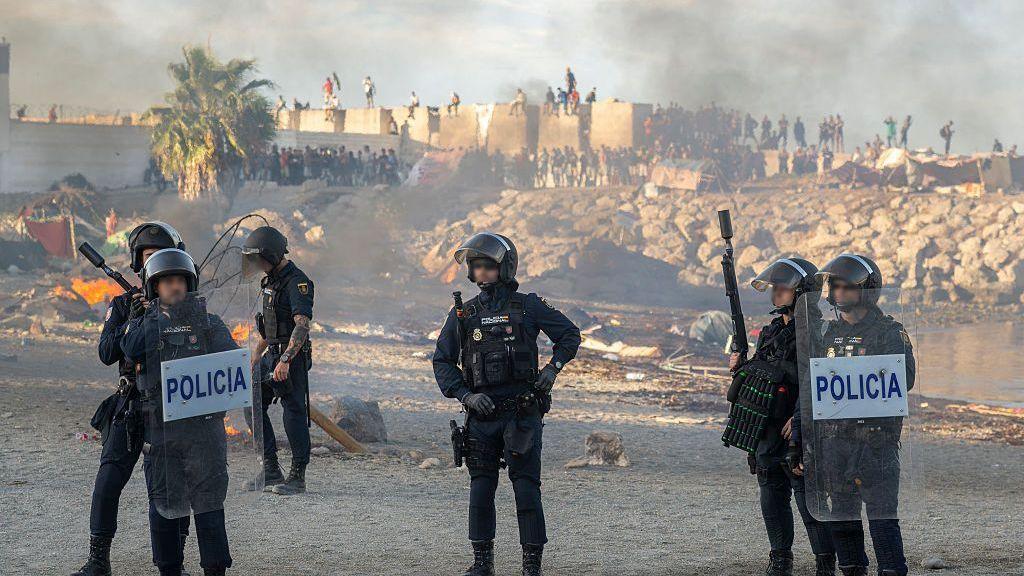
Early in the month, anti‑migrant protests were largely peaceful, but as tensions grew, demonstrations have become increasingly violent. On Thursday, dozens of locals blocked Red Cross volunteers from distributing food and water, and some set fires to migrant camps on Trampolín beach, a key shelter site.
That same day, 12 migrants were arrested for allegedly throwing stones at a military vehicle and injuring its crew. Vigilante groups reportedly pursued migrants through city streets, and journalists were threatened during these incidents.
Local leader, mayor Juan Jesús Vivas, demanded normality amid the pressure: “This city has the right to normality… The dignity of Spain is at stake.” He has criticized opposition and far‑right parties for stoking the divisions.
Madrid’s government has been accused of inefficiency. Interior Minister Fernando Grande‑Marlaska warned that “rhetoric and comments that contribute to the stigmatization of immigrants feed social division.”
Political leaders vied for blame—Vivas’s party said the government treated “the invaders as victims,” while the government called for responsibility and statesmanship.
The fallout deepens the spotlight on Ceuta’s sovereignty and its relation with neighboring Morocco, which has long claimed the territory. Spain’s Foreign Minister José Manuel Albares rejected “any talk of territorial integrity” with Morocco.
Images of the unrest depict police with riot shields confronting protesters and the burning of migrant camps, while Red Cross trucks on Trampolín beach highlight the humanitarian tensions.