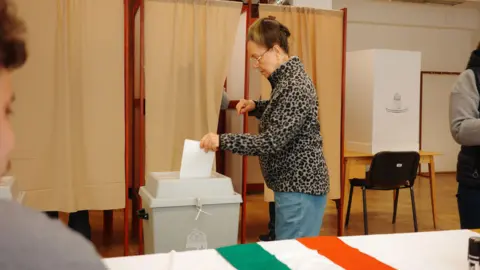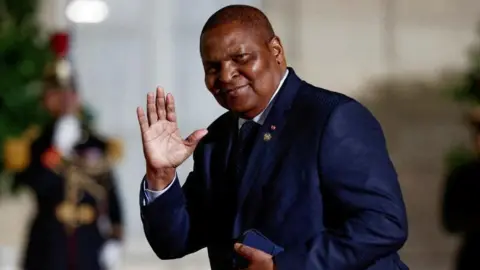
Central African Republic (CAR) President Faustin-Archange Touadéra has won a third term after securing an outright majority in last month's presidential election, provisional results show. The 68-year-old mathematics professor was widely expected to win after the main opposition coalition boycotted the poll, citing concerns about electoral fairness.
Touadéra campaigned on his security record in the chronically unstable nation after rebels seized power in 2013, leading to government support from Russian mercenaries and Rwandan soldiers.
Critics highlight that a 2023 constitutional change removing term limits allowed him to continue pursuing office. More than 2.4 million people registered for the 28 December election, which was described as largely peaceful despite some delays.
According to the preliminary results announced late Monday by the election agency, Touadéra received 76% of the vote. His closest challengers, Anicet-Georges Dologuélé and Henri-Marie Dondra, former prime ministers, garnered only 15% and 3% respectively.
Both rivals have called for the results to be annulled, alleging widespread irregularities and electoral fraud. Dologuélé stated that there had been 'a methodical attempt to manipulate' the election outcome. Meanwhile, the government has denied these claims, and the Constitutional Court has until January 20 to rule on any challenges and declare the final results.
The CAR, rich in resources like diamonds and uranium, remains one of Africa's poorest and most unstable countries, with about half of the population relying on humanitarian aid. The ongoing conflict, dating from the 2013 power seizure, continues to influence the political climate, though a 2019 peace agreement had eased tensions temporarily. Analysts suggest that Touadéra's victory might further strengthen Russia's influence in the region.
Touadéra campaigned on his security record in the chronically unstable nation after rebels seized power in 2013, leading to government support from Russian mercenaries and Rwandan soldiers.
Critics highlight that a 2023 constitutional change removing term limits allowed him to continue pursuing office. More than 2.4 million people registered for the 28 December election, which was described as largely peaceful despite some delays.
According to the preliminary results announced late Monday by the election agency, Touadéra received 76% of the vote. His closest challengers, Anicet-Georges Dologuélé and Henri-Marie Dondra, former prime ministers, garnered only 15% and 3% respectively.
Both rivals have called for the results to be annulled, alleging widespread irregularities and electoral fraud. Dologuélé stated that there had been 'a methodical attempt to manipulate' the election outcome. Meanwhile, the government has denied these claims, and the Constitutional Court has until January 20 to rule on any challenges and declare the final results.
The CAR, rich in resources like diamonds and uranium, remains one of Africa's poorest and most unstable countries, with about half of the population relying on humanitarian aid. The ongoing conflict, dating from the 2013 power seizure, continues to influence the political climate, though a 2019 peace agreement had eased tensions temporarily. Analysts suggest that Touadéra's victory might further strengthen Russia's influence in the region.