In brief
Archaeologists have uncovered a 15‑mm hole in the shoulder blade of a 75,000‑year‑old Neanderthal, suggesting he was struck by a sharpened wooden spear and killed. The wound, located in Iraqi Kurdistan’s Shanidar Cave, appears to be the earliest evidence of lethal violence with such a weapon. Experts debate whether the injury was from a hunting accident or an intentional attack, but the positioning points toward interpersonal violence. The find dovetails with earlier evidence from the Pit of Bones in Spain, indicating that violent conflict predates farming by hundreds of thousands of years. These discoveries challenge the prevailing view that human-on-human violence emerged only with settled societies.
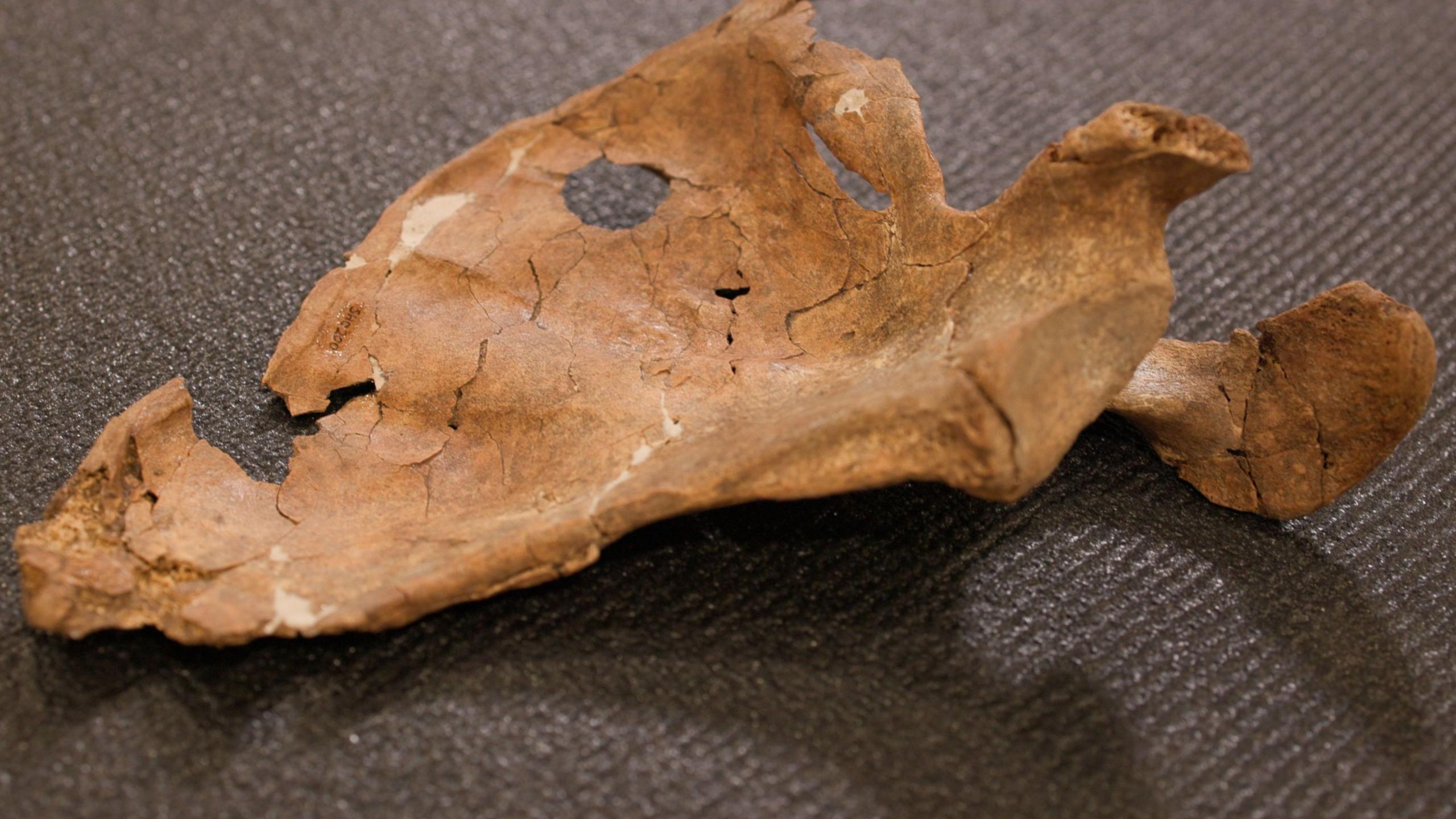
In a cave in northern Iraq, scientists have dated a 75,000‑year‑old Neanderthal burial to show a clean, round hole about 15 mm across in the left scapula, a mark that could be the result of a wooden spear that penetrated his chest, lungs and major blood vessels and exited on the back of the shoulder.
The injury, discovered in the Shanidar Cave, is being cited as the earliest documented evidence of lethal interpersonal violence involving a wooden projectile. Lead author Dr Emma Pomeroy from Cambridge University said the rectilinear shape of the wound matches the result of a sharpened spear and is unlikely to be natural bone damage.
While the researchers leave open the possibility that the wound could have come from a hunting mishap or “friendly fire”, experts such as Prof Chris Stringer of the Natural History Museum point to the improbability of friendly accident given the trauma’s trajectory and the absence of healed bone, suggesting it was likely an intentional attack.
The Shanidar find echoes earlier evidence from the same site, where a 50,000‑year‑old Neanderthal’s ribs show healed trauma consistent with a stone‑tipped spear. Together, these cases strengthen the hypothesis that organized or at least recurrent violence existed among hunter‑gatherer groups long before the advent of agriculture.
Neanderthals, a distinct species that vanished around 40,000 years ago, lived across Europe and western to central Asia and occasionally shared territory with early modern humans. The new evidence suggests that the social dynamics of these ancient peoples, including conflict and possibly territorial disputes, may have been more complex than previously assumed.
Beyond the Shanidar Cave, a 2022 study published in Scientific Reports examined 20 Neanderthal skulls from Spain’s “Pit of Bones”. Researchers noted 57 healed cranial injuries and nine skull fractures attributable to deliberate blows, indicating violent encounters as far back as 430,000 years ago. This research challenges the long‑held view that systematic violence only began with settled farming societies.
These discoveries collectively point to a longstanding pattern of interpersonal violence in human prehistory, prompting fresh debate over when and how violence scaled from solitary personal attacks to organized warfare.