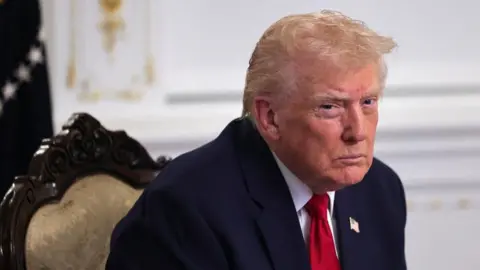
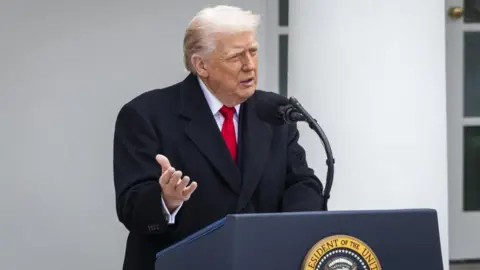
During President-elect Donald Trump’s heralded rise in political power, the nexus between the United States and China has been marred by conflicts. Yet, amid this tension lies a critical area of joint interest: the fight against fentanyl trafficking. Trump recently signaled his intent to impose tariffs on Chinese goods, a move rooted in addressing the ongoing flow of fentanyl into the U.S.—a crisis that has claimed numerous American lives.
Historically, some form of collaboration had existed between the two countries regarding narcotics enforcement. In a notable development last September, Chinese officials expanded the list of precursor chemicals associated with fentanyl production, tightening control after meaningful dialogue was initiated following a summit between President Biden and China's Xi Jinping in California.
Contrary to their usual stances on issues like nuclear engagement and human rights, this initiative presented an unusual opportunity for cooperation between these global competitors. China has emerged as the primary supplier of chemicals needed for fentanyl synthesis—an opioid that contributes significantly to America's ongoing drug epidemic. The majority of this illicit fentanyl ends up in the United States through Mexican drug syndicates, which combine these precursors and navigate their way across the U.S. border.
Despite these advances in cooperation, experts caution that much more remains to be done. Producers in China may evade regulations by creating new, unregulated precursor substances. Analysts from the Council on Foreign Relations emphasize the necessity for enhanced collaboration between U.S. and Chinese law enforcement, alongside a stronger commitment from China towards anti-money laundering initiatives to disrupt the financial networks sustaining this trafficking.
The prospect of implementing tariffs has raised concern among analysts, who warn it may do more harm than good in tackling fentanyl-related issues. Vanda Felbab-Brown, a senior fellow at the Brookings Institution, pointed out that tariffs might disconnect ongoing counternarcotics cooperation at a time when increased collaboration had only recently been rekindled after a prolonged hiatus.
As the situation unfolds, it is clear that the complexities of the opioid crisis require a thoughtful and coordinated strategy, one that should not be jeopardized by escalating trade tensions.