The European Union has been busy behind the scenes preparing for a potential economic clash with the Trump administration. In 2024, officials drew up secret plans to address the possibility of imposing higher tariffs on European goods. With Trump's recent threats becoming increasingly concrete, the E.U. is now outlining its strategy.
The plan focuses primarily on specific sectors that could be politically sensitive, especially products manufactured in Republican states. Targeted tariffs aim to deliver a significant impact without escalating into a damaging trade war. The E.U. intends to act swiftly and decisively, possibly employing new approaches that could also target major service providers, including tech giants in Silicon Valley.
Sources close to the matter describe the intricate balance the E.U. is attempting to navigate—a delicate dance of negotiation and defense. The bloc is keen to avoid what they term a “self-defeating disaster” stemming from a tit-for-tat situation with the United States, which could ultimately favor geopolitical rivals like China and Russia.
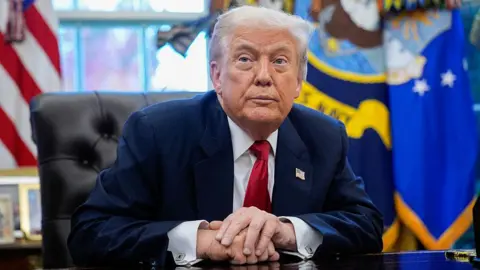
President Trump has made clear his intention to impose tariffs, stating that the E.U. “definitely” faces this prospect soon. To counter this, E.U. officials are suggesting offers to negotiate, including commitments to purchase more American gas—a proposal that aligns with Trump's interests.
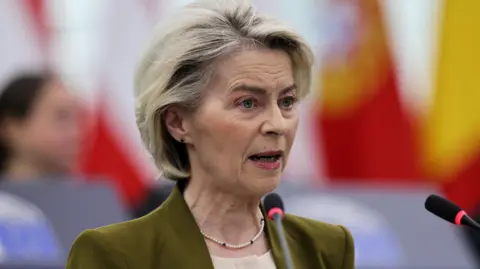
Ursula von der Leyen, the president of the European Commission, recently reaffirmed the E.U.'s readiness to respond. “We are prepared,” she asserted in a Brussels press conference, indicating that Europe is gearing up for potential fallout from the U.S. administration’s trade policies.
In summary, as tensions rise, the E.U. is positioning itself to navigate a tricky trade environment while extending an olive branch to mitigate confrontation.
The plan focuses primarily on specific sectors that could be politically sensitive, especially products manufactured in Republican states. Targeted tariffs aim to deliver a significant impact without escalating into a damaging trade war. The E.U. intends to act swiftly and decisively, possibly employing new approaches that could also target major service providers, including tech giants in Silicon Valley.
Sources close to the matter describe the intricate balance the E.U. is attempting to navigate—a delicate dance of negotiation and defense. The bloc is keen to avoid what they term a “self-defeating disaster” stemming from a tit-for-tat situation with the United States, which could ultimately favor geopolitical rivals like China and Russia.
President Trump has made clear his intention to impose tariffs, stating that the E.U. “definitely” faces this prospect soon. To counter this, E.U. officials are suggesting offers to negotiate, including commitments to purchase more American gas—a proposal that aligns with Trump's interests.
Ursula von der Leyen, the president of the European Commission, recently reaffirmed the E.U.'s readiness to respond. “We are prepared,” she asserted in a Brussels press conference, indicating that Europe is gearing up for potential fallout from the U.S. administration’s trade policies.
In summary, as tensions rise, the E.U. is positioning itself to navigate a tricky trade environment while extending an olive branch to mitigate confrontation.