
In brief
Amidst the remnants of war, the people of Homs, Syria are grappling with painful memories while looking toward potential renewal and healing. Young survivors like Baraa, whose childhood was marred by violence, now express optimism for the future, signaling a shift from despair to dreams of rebuilding their lives.
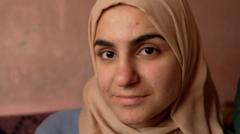
In the streets of Homs, once known as the "capital of the revolution," a palpable sense of hope is rising among the city's inhabitants. Baraa, a 20-year-old university student, reflects on her past with bittersweet emotions, recalling the nightmarish experiences she faced fleeing her childhood home almost a decade ago. “Even now, I look back and wonder how we survived this nightmare,” she says, her voice soft yet resolute.On a cold winter day, adorned in fashionable attire, Baraa shares her newfound joy with her sisters Ala and Jana at their modest home, where their father, Farhan Abdul Ghani, expresses his relief over the end of Bashar al-Assad's rule. “We did not want war, nor a permanent president,” he states, highlighting the frustrations felt by many families affected by the ongoing conflict.The family's journey has been fraught with hardships since the onset of the civil war in Syria in 2011, when peaceful protests quickly descended into a profound humanitarian crisis. Baraa recollects her early days, where survival became a brutal challenge. “Instead of learning to read and write, I learned about weapons,” she recalls, a reflection of her childhood overshadowed by violence and devastation.Homs was ravaged during the conflict, enduring sieges and severe restrictions, yet the resilience of the people remains steadfast. After being rescued from their besieged neighborhood in 2014, many families, including Baraa's, struggled to maintain hope. Now, as access improves and basic goods become more affordable, life in Homs is beginning to show signs of recovery.“Everything is cheaper now,” Farhan mentions with a gleam of pride. “Today, I could even afford to buy meat.” The gradual reopening of roads has revitalized trade, a crucial step in a city that has been grappling with poverty, impacting over 90% of its residents.However, the scars of the past are still present. Dr. Hayan al-Abrash, who lost his brother in one of Syria's notorious prisons, still feels the weight of grief as he revisits the ruins left by the war. With a mix of anger and determination, he acknowledges that while vengeance is tempting, the priority must be rebuilding a united Syria, free from the historical challenges that divided them.As communities begin to mingle once more, interactions between Muslims and Christians in Homs signal hope for a synergistic rebuilding effort, as residents strive to reconnect over shared memories of hardship and loss. Father Tony Homsy, a Jesuit priest guiding the Catholic community in Homs, draws inspiration from previous leaders like Father Frans der Lugt, who sacrificed his life to protect residents during the siege. He admits that the path to healing will be long and arduous, but asserts, “It’s time to move forward.”In every corner of Homs, residents seem eager to reconstruct not only their homes but also their spirits, a testament to the strength and resilience that grows even in the harshest of landscapes. As new plans and dreams emerge, echoes of laughter and newfound hope reverberate through the streets of Homs, heralding a new chapter for this beleaguered community.
