
In brief
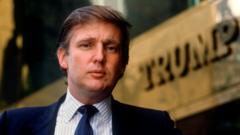
Donald Trump’s fascination with tariffs began in the late 80s, influenced by Japan’s economic prowess and his perception of unfair trade practices. His views would later shape his policies as a president, emphasizing protectionism and skepticism towards free trade.
When Donald Trump sought financial refuge in the 1990s, he turned to his superyacht, the Trump Princess, navigating toward Asia with hopes of captivating Japan's affluent investors. This was not his initial endeavor to court Japanese financial backers; Trump's encounters in the competitive New York real estate sector during the 1980s deeply ingrained in him a perception of Japan's economic ascendancy. As he watched Japanese investment flourish, manifesting in iconic acquisitions such as Rockefeller Center, Trump's perspective on trade dynamics and ally relationships began to crystallize.Barbara Res, a former executive at the Trump Organization, recalls Trump's rising resentment towards Japan's elite business figures, whom he viewed with jealousy. Trump, feeling overshadowed by the success of Japanese entrepreneurs, expressed his frustration with America's long-standing military commitments to Japan, suggesting that the U.S. was receiving insufficient returns on its investments.Throughout the late 80s, Trump's narrative became one of grievance against what he perceived as unfair economic competition. His statements during interviews, including appearances on *Larry King Live* and *Oprah Winfrey Show*, showcased his belief that Japan was manipulating trade markets to its advantage while the U.S. suffered losses in manufacturing jobs and economic leadership.Amidst rising competition from Japanese electronics and automobile manufacturers, Trump’s frustration resonated with a broader audience. Jennifer Miller, a historian, suggests that Trump's sentiments were reflective of a larger American skepticism about international policies and the economic competitiveness of the U.S. at the time.In a bold move, Trump publicized his concerns through full-page newspaper ads, arguing that America's allies had exploited its defense commitments, which allowed countries like Japan to prosper economically while the United States bore the brunt of military expenses. This marked the beginning of his endorsement of tariffs as a practical solution to rectify trade imbalances.Trump's approach to foreign affairs, as articulated in his ads, advocated a stark stance against perceived freeloaders, thereby championing protectionist policies. Clyde Prestowitz, a former negotiator with Japan during the Reagan administration, critiques Trump’s simplistic outlook and affirms the need for a comprehensive strategy rather than mere tariff threats.While fears of Japan's economic dominance have largely subsided and transitioned towards concerns regarding China, Trump's belief in tariffs as a negotiation tool remains firmly rooted. Michael Strain of the American Enterprise Institute underscores that Trump's perception of trade, seen through a lens of zero-sum competition, is prevalent among many, even as it challenges the Republican Party's traditional support of free trade.Joseph LaVorgna, a senior economist from Trump’s previous administration, suggests that Trump’s intentions extend beyond mere tariff implementations; there’s a vision aimed at revitalizing American manufacturing through strategic policies, combining tariffs with favorable regulatory and tax environments.Although support for Trump’s stance on tariffs is widespread among Republican lawmakers, some concerns regarding rising consumer costs and possible impacts on international relationships prevail. As economic discussions continue to unfold, Trump's unwavering passion for tariffs can be traced back to his foundational experiences in Japan – a sentiment that has significantly influenced his business and political ethos.
