
In brief
From Mughal influences to modern interpretations, Indian painters have created a unique vision of Christ's birth, merging diverse styles and local narratives that challenge conventional Western perspectives.
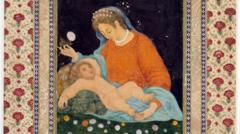
The birth of Jesus Christ has traditionally been depicted by many Western artists, often following European artistic norms that define the biblical narrative. These depictions have formed a foundational view of Christianity in the global context, subtly separating it from other cultural interpretations. In contrast, Indian artists have historically portrayed this event through lenses rich with local heritage, often incorporating Islamic elements and styles.In India, during the reign of Mughal emperor Muhammad Jalaluddin Akbar, the introduction of Christianity came with the arrival of Jesuit missionaries. They enriched the artistic landscape of northern India, leading to a unique blend of European Christian artworks and Islamic artistic motifs. This dynamic influence is evidenced in the work of Mughal court painters, who began to integrate these diverse elements into their depictions of holy scenes. Historian Neha Vermani highlights the significance of a specific painting where Mughal emperor Jahangir is illustrated within the nativity scene, shedding light on the rulers' vision of cooperative coexistence among religions.Archival pieces from this period, such as an 18th-century painting characterized by Mughal artistry—stylized figures and vibrant hues—demonstrate this cultural exchange. The British Museum preserves this lively depiction, capturing a moment where religious narratives merge into the broader socio-political landscape.The 20th century ushered in artists like Jamini Roy, who was born in 1887 in West Bengal. Renowned for his integration of Bengali folk art with broader visual idioms, his works reflect a personal interpretation of Christ that resonates with local socio-cultural experiences. Art curator Ashish Anand indicates Roy's portrayal of the Santhal tribes, showcasing Christ’s life as relatable to marginalized communities, thus emphasizing the universality of his sacrifice across cultural boundaries.Similarly, Anglo-Goan painter Angelo de Fonseca emerged in 1902, whose work vividly contrasts with traditional Western iconography. De Fonseca’s representations place Mary and Jesus within familiar Indian locales, with Mary depicted in a sari as an Indian woman, subverting typical Western images. As Rinald D'Souza notes, Fonseca’s artistry aimed to re-establish Christianity’s narrative within an Indian context, making it relevant and accessible to local audiences.Through these artists and their compelling contributions, the birth of Jesus is not merely observed but redefined. Each painting articulates a story that reflects the rich tapestry of Indian life, presenting Christianity through a lens that honors indigenous cultures and perspectives.