
In brief
The European Union's approval for Romania and Bulgaria to enter the Schengen travel zone marks a significant milestone for the two nations, promising hassle-free travel for citizens. However, road transport remains complicated due to persistent border checks, particularly affecting truck drivers.
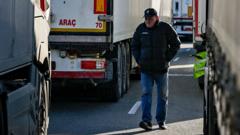
In a landmark development for bilateral relations, Romania and Bulgaria are now set to become part of the European Union's Schengen border-free area starting January 1, 2025. This announcement follows a lengthy 17-year wait after both countries joined the EU, with EU Commission President Ursula von der Leyen celebrating it as a "day of joy" for the 25 million residents who will now enjoy the right to travel without passport checks across vast regions including France, Spain, and Norway.This pivotal decision marks the end of an era of rigorous border control for air and sea travelers since border checks were lifted last March. Yet, the journey for land travelers is still riddled with challenges. While Austria's recent approval has eased some restrictions, truck drivers continue to face extensive bureaucratic processes. Hungary plans to maintain thorough inspections for trucks at the primary border crossing with Romania for six additional months. Additionally, Bulgaria has implemented new charges and electronic barriers at its Ruse truck park, further complicating logistics for commercial transportation.For many truck drivers, the lengthy waits at borders have affected their livelihoods considerably. Radu Dinescu, head of the Romanian Road-Haulers' Association, shared that trucks can face waits of up to 12 hours at border crossings, a consequence of bureaucratic inefficiencies that have cost the Romanian road transport sector nearly €19 billion over the past decade. Although the lifting of border controls will primarily benefit personal vehicle users initially, Dinescu opines that significant improvements for truck transport might take longer due to the remaining inspection protocols being conducted at borders rather than centralized facilities.While some view the easing of border regulations as a progressive step, others call for immediate action to address the underlying bureaucratic issues. Several businesses express confidence that as the EU encourages better cooperation among member states, the logistical barriers that have stymied trade and investment will gradually dissipate.In a hopeful outlook, wine exporter Philip Cox believes that the lingering border controls will eventually diminish within six months, leading to increased competitiveness for Romanian products in broader European markets. Nonetheless, the journey towards a fully functional border-free transport system remains a work in progress for Romania and Bulgaria as they integrate more closely into the EU framework.


