In brief
As global powers recalibrate, China's investment in the Chancay port marks a significant development for Peru and surrounding nations while raising concerns for U.S. policymakers.
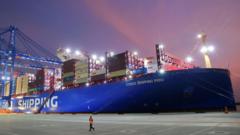
In a revealing demonstration of China's expanding influence, the new Chancay megaport on the Peruvian coast has been inaugurated, highlighting a strategic shift in trade dynamics in Latin America. This $3.5 billion undertaking, spearheaded by China's state-owned Cosco Shipping, has turned a once-obscure fishing village into a logistical hub with far-reaching implications for regional trade, particularly as tensions mount between the U.S. and China.Chinese President Xi Jinping attended the inauguration during the Asia-Pacific Economic Cooperation (APEC) summit, underscoring China's commitment to deepening relationships within Latin America. As the U.S. looks on, observers note that Washington's historical neglect has created opportunities for China to establish permanent roots in the region, according to experts like Monica de Bolle from the Peterson Institute for International Economics.Chancay is expected to increase trade efficiency significantly, cutting shipping times from South American countries to China from 35 days to just 23, while also accommodating larger vessels. This paves the way not only for imports of Chinese goods but also for South American exports such as Brazilian soy and Chilean copper—a lucrative market for China.The implications of this port reach into military concerns as U.S. authorities express anxiety over the possibility that Chancay could serve as a strategic naval point for the Chinese military. General Laura Richardson, the recently retired chief of U.S. Southern Command, warns that China is building infrastructure with potential dual-use capabilities, which may one day facilitate military access in the region.Despite concerns, South American countries have been quick to embrace Chinese investments as they seek to stimulate their own economies amid perceived U.S. indifference. China’s Belt and Road Initiative, an ambitious global infrastructure program, has prompted many governments to overlook initial hesitations about Chinese influence.Experts agree that the balance of power is shifting. While there are signs of goodwill towards the U.S. in various Latin American nations, it remains crucial that the U.S. enhance its engagement efforts in what many see as a vital strategic arena. Eric Farnsworth from the Council of the Americas highlighted that the underlying needs of the region aren't being met by U.S. support, making it imperative for the northern neighbor to respond robustly to China’s advances.As trade relationships and military strategies evolve, Latin American countries will be watching closely for shifts in U.S. policy with the incoming Trump administration. With renegotiations looming on various trade agreements, nations like Peru, Chile, and Colombia face a balancing act that could influence their ties with both superpowers in an increasingly complex geopolitical landscape.