
In brief
Delhi's air quality has recently plummeted, with pollution measurements soaring to alarming levels, posing severe health risks to residents and prompting government intervention.
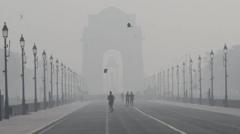
In recent days, air quality in Delhi has sharply declined, placing the capital in the "very poor" category, according to new data. With pollution levels reported to be 25-30 times higher than the World Health Organization's (WHO) recommended safe limits last week, health experts have sounded the alarm about the air quality crisis in the city. The situation is expected to escalate further due to adverse weather conditions, the firing of firecrackers for Diwali celebrations on Thursday, and the ongoing issue of crop residue burning in surrounding states.Every year, pollution spikes from late October through January, severely impacting day-to-day life, forcing businesses to halt operations and schools to close. The government has reported that fine particulate matter (PM 2.5), capable of causing chronic respiratory issues, has seen levels soar as high as 350 micrograms per cubic meter. This data underscores the critical state of air quality, categorized as “very poor” when levels reach between 300 and 400 micrograms and “severe” at 400-500 micrograms.Winter months bring extreme pollution to Delhi due to a combination of smoke, dust, stagnant wind patterns, vehicle emissions, and the burning of crop stubble mainly from the neighboring states of Punjab and Haryana, where farmers burn leftover straw to prepare their fields for the new planting season. Farmers argue they require governmental support to transition to alternative crop residue management methods; however, existing programs have proven ineffective.In advance of the Diwali festivities, the Delhi government has imposed a ban on the production, storage, and sale of fireworks, an effort replicated annually due to the associated air quality concerns. Nonetheless, historically, these bans have had limited success, as residents often procure fireworks from neighboring states.To combat this pollution crisis, the Delhi government has activated its Graded Response Action Plan (GRAP), prohibiting the use of coal and firewood as well as the operation of diesel generators for non-emergency situations. The city authorities have advised residents to remain indoors whenever possible, curtailed construction operations, and encouraged the use of public transport to alleviate vehicular emissions.
