
In brief
Breytenbach was celebrated for his artistic talent and unwavering stance against the injustices of apartheid, making an indelible mark on South Africa's literary and political landscape during his lifetime.
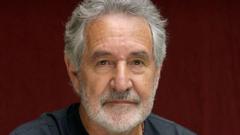
Renowned South African writer and anti-apartheid activist Breyten Breytenbach has passed away at the age of 85, as confirmed by his family. He died peacefully in his sleep in Paris, with his devoted wife, Yolande, by his side. Known for his sharp criticism of the apartheid regime, Breytenbach was more than just a poet; he was a symbol of resistance against oppression.His family released a statement describing him as "an immense artist, militant against apartheid," noting that he fought tirelessly for a better world throughout his life. Breytenbach's intellect and activism were so impactful that, during the bleakest days of apartheid, he was humorously labeled "the only nice South African" by British television's satire show Spitting Image.Born in the Western Cape on September 16, 1939, Breytenbach grew up in a family of five and spent much of his life in exile, all while remaining deeply connected to his roots. He studied at the University of Cape Town and joined the Sestigers, a group of Afrikaans writers focused on addressing the dark realities of apartheid through the beauty of their language.Though his work was rooted in Afrikaans, which had become associated with the oppressive regime, Breytenbach maintained a complex relationship with his heritage. He famously stated, "I'd never reject Afrikaans as a language, but I reject it as part of the Afrikaner political identity." By 1960, he had left South Africa for a self-imposed exile, primarily in Europe, but continued to condemn the apartheid system.In 1975, while at the peak of his literary success, Breytenbach made a clandestine return to South Africa to support resistance groups, but was arrested and sentenced to seven years in prison for terrorism. He used his time behind bars to write, producing his influential work, "The True Confessions of an Albino Terrorist," which chronicled his harrowing experiences during imprisonment, including two years in solitary confinement. His release in 1982 came through the efforts of then French President François Mitterrand.After apartheid's fall, Breytenbach grew critical of the African National Congress (ANC), which he accused of corruption. His activism extended beyond South Africa—he wrote open letters addressing global injustices, including the Israeli-Palestinian conflict.Over his lifetime, Breytenbach published more than 50 books, many of which have been translated globally, and created surreal paintings focusing on themes of captivity. His artistic contributions were recognized when he was named a Knight of the Order of Arts and Letters, France's prestigious cultural honor.Breytenbach leaves behind his wife Yolande, daughter Daphnée, and two grandsons. His legacy as a champion for human rights and a fierce opponent of injustice will continue to resonate for generations to come.


