
In brief
Global equity markets suffered steep losses as China's decisive countermeasures against President Trump's tariffs ignited fears of an extended economic dispute, risking a potential recession.
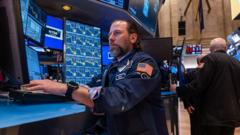
---Stock market upheaval intensified on Friday as China issued a stern response to the tariffs imposed by Donald Trump, dramatically increasing fears of a prolonged trade war and its possible negative impact on the global economy. All three major U.S. stock indexes saw significant declines of over 5%, with the S&P 500 plummeting nearly 6%, marking the worst week for the U.S. stock market since 2020.In the UK, the FTSE 100 experienced its most severe drop in five years, falling nearly 5%. Markets across Asia mirrored these declines, while European exchanges in Germany and France also faced similarly detrimental impacts. Despite the worrying trend, Trump downplayed the market's turmoil, pointing to the strength of the labor market and encouraging resilience among his supporters. "Hang tough," he said on social media. "We can't lose."The global stock market has shed trillions in value since Trump announced sweeping 10% tariffs on goods imported from various countries, including major trading partners like China, the European Union, and Vietnam. Analysts describe this as one of the largest tax increases in the U.S. since 1968 and predict it could cause a significant contraction in trade, potentially pushing many nations toward economic recession.In response to the tariffs, China announced its own import taxes of 34% on U.S. goods, restricted exports of essential minerals, and placed U.S. businesses on a blacklist, labeling Trump's tactics as "bullying" and a breach of international trade regulations. Other nations expressed hopes for negotiations, even as the White House displayed mixed signals regarding its willingness to engage in dialogue. Maroš Šefčovič, the EU trade commissioner, indicated that the bloc was ready for meaningful negotiations but also prepared to defend its interests.Trump's tariff strategy aligns with his campaign promises but has exceeded the expectations of many analysts, leading to alarming declines in major U.S. stock prices reminiscent of the chaotic market conditions during the onset of the COVID-19 pandemic in 2020. This downturn began with heavily impacted companies like Apple and Nike, which depend on Asian suppliers, but eventually swept through industries generally unaffected by tariffs, including consumer goods and healthcare.Mike Dickson from Horizon Investments expressed a bleak sentiment about the market, stating, "Candidly, the mood is pretty sour and it should be." He raised concerns about the implications of China's swift retaliation. In its assessment, JP Morgan increased the probability of a global recession within the year from 40% to 60%, attributing it to the shock from the tariffs, which could reduce U.S. growth by two percentage points.Some investors, however, were more optimistic about the recent dips, noting they followed a long streak of rising share prices. "These market shifts seem violent because declines happen much quicker than gains," said Tim Pagliara, CEO of CapWealth, asserting that a reset in global trade relations is necessary. Fed Chair Jerome Powell similarly acknowledged the economy's robust status but noted "significant uncertainty," pointing out that current tariff levels surpassed many inflation forecasts, which could lead to slower growth and rising costs.In market activity, housing-related stocks showed resilience, as some investors speculated that the financial turmoil might drive down mortgage rates, giving a lift to the housing sector. Likewise, shares of companies like Nike rebounded on Friday after Trump described a positive dialogue with Vietnam’s leadership about tariffs.In contrast, Apple saw its shares plunge more than 7%, with a significant market value loss of approximately 15% since just Wednesday alone. The Dow Jones Industrial Average fell by 5.5%, marking a 10% decline since February and crossing the milestone known as a correction. The Nasdaq experienced a similar downturn of 5.8%, having lost around 20% of its value since December.In the UK, the FTSE 100 closed nearly 5% lower, indicating the most substantial one-day drop since March 2020. France's CAC 40 dropped by 4.3%, while Germany's DAX index faced a decline of almost 5%. Japanese markets also felt the impact, with the Nikkei 225 decreasing by more than 2.7%.The ongoing turmoil in the markets raised alarms even among Trump's allies. Senator Ted Cruz warned of potential adverse effects if tariffs remained in place for extended periods, stating, "That is a terrible outcome."The implementation of tariffs has created widespread concern, affecting various sectors domestically and abroad. Farmers like Louise and Vance Ehmke in Kansas expressed anxiety about rising costs due to tariffs on steel and aluminum, fearing retaliation on their grain exports. Meanwhile, Janet Robertson in the Falkland Islands pondered the repercussions of a new 42% tax on exports to the U.S. as she assessed the future of their fishing industry.As the situation develops, the world remains on edge, grappling with the potential fallout from the rapidly escalating trade tensions.

