
In brief
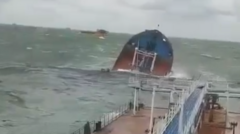
Two Russian oil tankers have been involved in a disastrous incident in the Black Sea, leading to extensive damage and an oil spill. Footage from Russia's Southern Transport Prosecutor's Office shows one tanker split in half with visible oil slicks in the water surrounding it. The tankers are reportedly grounded after drifting offshore, with at least one crew member confirmed dead. The incident occurred in the Kerch Strait, the maritime boundary between Russia and Crimea, a region unlawfully annexed by Russia in 2014.
Rescue operations have managed to save 13 crew members from one of the tankers before being halted due to inclement weather. The remaining 14 crew aboard the second vessel are equipped with sufficient resources for survival but are expected to remain stranded until weather conditions improve. Russian President Vladimir Putin has ordered the formation of a working group to address the situation, led by Deputy Prime Minister Vitaly Savelyev, while authorities investigate the potential for criminal negligence.Industry analyst Michelle Bockmann mentioned that both tankers, owned by Volgatanker, are relatively small, each carrying approximately 4,300 deadweight tonnes of oil. This is significantly less than typical tankers used for global trade, which can hold around 120,000 deadweight tonnes. The Kerch Strait is a crucial export route for Russian grain and another energy resources. Past incidents, such as the sinking of the Volgoneft-139 in 2007, have raised concerns about the safety and environmental implications of such operations.Amid heavy sanctions placed by Ukraine's allies on Russian oil imports since Russia's full-scale invasion in 2022, there have been allegations of a so-called ghost fleet being utilized to transport oil. However, experts suggest that the tankers involved in this recent wreck are not part of that fleet, leaving questions about the maintenance and operational practices of the vessels. Additional reporting has revealed that India's oil imports from Russia have surged dramatically, highlighting ongoing geopolitical tensions related to oil trade.

