
In brief
The campaign, sparked by a controversial auction of a Naga skull, highlights ongoing issues around colonial legacies and ancestral respect.
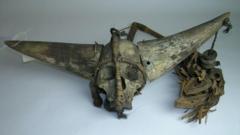
In a surprising turn of events, the Naga people's pursuit for justice regarding their ancestral remains has gained momentum. Just last month, Ellen Konyak of the Naga Forum for Reconciliation (NFR) learned that a skull belonging to a Naga tribesman from Nagaland was being auctioned at a UK antique center. This disturbing find served as a reminder of the historical injustices where such human remains, along with other cultural artifacts, were extracted during colonial times.The auction house, The Swan at Tetsworth, had valued the 19th-century horned skull—like many others collected by European colonial administrators—between £3,500 and £4,000. In addition to the skull, the sale included exceptionally rare items like shrunken heads from the Jivaro tribe of South America. Such a marketplace for ancestral remains was understandably met with outrage, prompting Konyak to call the auction “deeply hurtful” and a continuation of “colonial violence.”Following widespread protests, which included a stern letter from Nagaland's Chief Minister to India’s foreign ministry, the auction house quickly withdrew the item. However, this incident shed light on the pressing need for the repatriation of Naga remains long kept in foreign land. Alok Kumar Kanungo, a noted scholar of Naga culture, estimates that UK public museums and private collectors hold approximately 50,000 Naga objects, with the Pitt Rivers Museum in Oxford housing the largest collection—around 6,550 items, including 41 human remains.Faced with mounting ethical questions surrounding the display and sale of human remains, museums worldwide are beginning to reconsider their collections. The Pitt Rivers Museum previously removed Naga remains from public view and launched an ethical review process. They have since returned 35 objects, mainly to Australia and New Zealand, but have yet to process a formal repatriation claim from Naga descendants.Efforts like the NFR's "Recover, Restore and Decolonise" initiative aim to support this complex journey of repatriation, addressing both logistical hurdles and the deep emotional connections that communities have with their ancestors. The Naga people, who now primarily follow Christianity, are also grappling with the spiritual implications—how to right the wrongs of the past while respecting and honoring their ancestral traditions.Anthropologists involved in the efforts highlight that even many Naga elders were unaware that their ancestors' remains were displayed overseas, leading to profound feelings of restlessness regarding these displaced souls. The Naga peoples' continued challenges echo broader conversations about cultural heritage, colonialism, and the path toward healing and reconciliation in a world still reckoning with its past. Konyak herself has discovered remains tied to her family lineage, emphasizing the deep personal impact of these proceedings and their significance in reclaiming Naga identity and history.

