In brief
A striking discovery of an armoured dinosaur named Spicomellus afer, known for its impressive metre-long spikes, challenges previous assumptions about the evolution of ankylosaurs. This prehistoric creature, which lived 165 million years ago, suggests that ankylosaurs may have had more elaborate defensive features earlier in their history than previously thought, prompting further research into their evolutionary path.
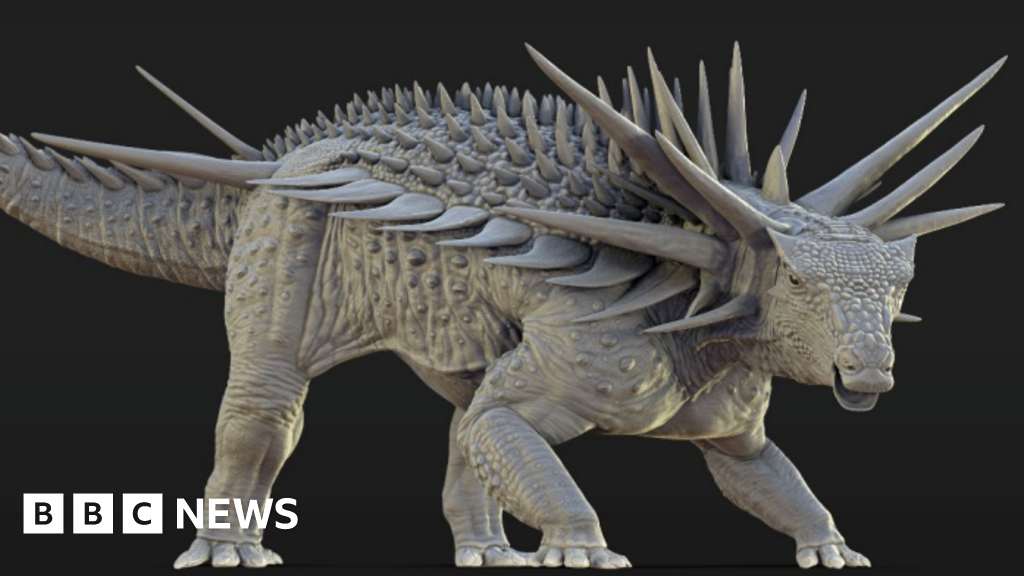
Scientists have discovered a bizarre armoured dinosaur with metre-long spikes sticking out from its neck. The species, called *Spicomellus afer*, lived 165 million years ago, and is the oldest example of a group of armoured dinosaurs called ankylosaurs. This discovery, made in Morocco, has astonished experts, who must now rethink the evolutionary history of these creatures.According to Prof Richard Butler from the University of Birmingham, who co-led the research, the dinosaur can be described as the punk rocker of its time due to its atypical form and features.The findings suggest that the spikes were not just for show; their unique morphology, unlike anything seen in other known species, raises new questions about the function and evolution of ankylosaur armor. Prof Susannah Maidment, leading research from the Natural History Museum, emphasized the peculiar nature of the spikes that appear fused directly onto the bones, a phenomenon not observed in any other known animal.The implications of this discovery extend to the evolutionary timeline of ankylosaurs, suggesting they may have started with elaborate defensive features, which later streamlined for practicality against large predators like the T. Rex during the Cretaceous period. The research highlights the need for a reevaluation of the armor evolution within this group, indicating these structures might initially have been for display before serving protective purposes.The fossils were uncovered by a local farmer in Boulemane, marking the first ankylosaur find on the African continent. The research, led by an international team, has been published in the journal *Nature*, signifying a significant step in paleontological discoveries.