In brief
This article takes you through the fascinating journey of how Olympic ice is made, highlighting the roles of ice masters, the differences in ice requirements for various sports, and the essential factors affecting ice quality and athlete performance.
Olympic ice describes the uniform ice surface specified for international competitions, including the Winter Olympics.
Skilled technicians responsible for making and maintaining the ice are known as 'ice masters'. Their main task is to ensure the surface is optimal for athletes competing in sports such as curling, ice skating, and ice hockey.
The ice hockey arena in Milan-Cortina, built specifically for men's and women's matches, was completed amidst delays and last-minute construction challenges.
But how do they actually create the ice?
It all begins with a five-centimeter layer of insulation laid down on a concrete floor. Following this, a vapor barrier is placed before engineers arrange mats containing glycol to keep the ice cold. Boards and glass walls are then added around the rink before approximately two inches of water is introduced above the mats, creating the initial ice sheets.
The surface is then painted white and sealed, with ice hockey markings added. Finally, three to four centimeters of water are layered on top to establish the playing surface. Ice temperatures are consistently maintained between -5 and -4°C.
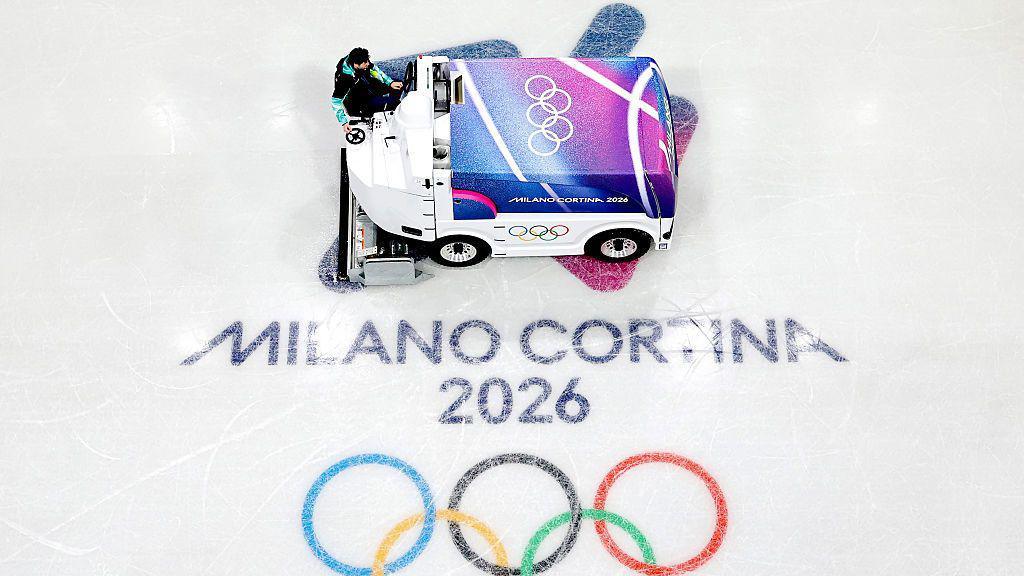
Regular maintenance is performed using resurfacing machines, commonly known as Zambonis, which shave away the top layer of ice to form a new smooth surface.
Mark Messer, an ice master overseeing long track speed skating, emphasizes the difficulties posed by implementing a new system for such a high-profile event with limited preparation time. Although ice has been created in temporary settings before, this is the first occurrence of doing so on an Olympic scale.
In terms of sports, different ice formats are crucial to support the athletes' performances. For example, curling requires a pebbled texture achieved by spraying water that freezes into droplet formations, whereas ice hockey demands a harder surface to allow athletes to stop quickly. Long track speed skating necessitates a thin, hard surface of ice, keeping it the coldest among Olympic ice sports.
The figure skating and short track speed skating events will take place in the same venue in Milan-Cortina, requiring technicians to modify the surface several times throughout the Games, a process that can take up to three hours. Figure skating requires a warmer and softer ice, while short track needs it to be thin and cold.
The purity of the water used is also critical in creating and maintaining the quality of Olympic ice. Ice masters monitor the pH levels and purify the water to remove minerals and impurities. The balance of total dissolved solids is vital; if too high, the ice may cloud over, but if too low, it won't bond properly and can break apart.
Lastly, external factors like temperature changes, venue lighting, and crowd density significantly affect the ice's quality, influencing athlete performance. All these components together contribute to creating the perfect ice for Olympic competitors.