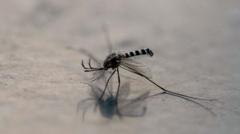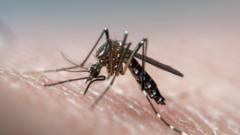
The study, published in the journal PNAS, revealed that the genetic alteration involved a protein known as trpVa, essential for sound detection in mosquitoes. In experiments, these modified males remained completely ineffectual in mate selection, spending three days in the same enclosure without mating success. Meanwhile, their wild counterparts actively pursued and fertilized eggs of nearly all the females.
Dr. Joerg Albert, a specialist in mosquito mating from the University of Oldenburg, praised the research, indicating the potential for sound manipulation in mosquito control. He cautioned, however, that while this method could significantly reduce species populations, its ecological impacts must also be considered, given that mosquitoes play a role in the food chain and some serve as pollinators.
Furthermore, researchers are also looking into alternative strategies, such as releasing sterile males in areas affected by mosquito-borne diseases. As these innovative methods unfold, they offer new hope in the global fight against the health threats posed by mosquitoes.
Dr. Joerg Albert, a specialist in mosquito mating from the University of Oldenburg, praised the research, indicating the potential for sound manipulation in mosquito control. He cautioned, however, that while this method could significantly reduce species populations, its ecological impacts must also be considered, given that mosquitoes play a role in the food chain and some serve as pollinators.
Furthermore, researchers are also looking into alternative strategies, such as releasing sterile males in areas affected by mosquito-borne diseases. As these innovative methods unfold, they offer new hope in the global fight against the health threats posed by mosquitoes.