
In brief
President Donald Trump signed an executive order changing the name of Lake Ontario to Lake America, a decision tied to ongoing trade conflicts with Canada. The move follows the imposition of new tariffs on Canadian goods and Canada’s pledge to retaliate with counter‑tariffs. Canadian officials defiantly rejected the renaming, citing the lake’s historic name and international agreement. The proposal has sparked ridicule and legal concerns, as well as political jokes from state governors across the U.S. and Canada alike. The renaming illustrates the increasingly symbolic nature of Trump's foreign‑policy disputes.
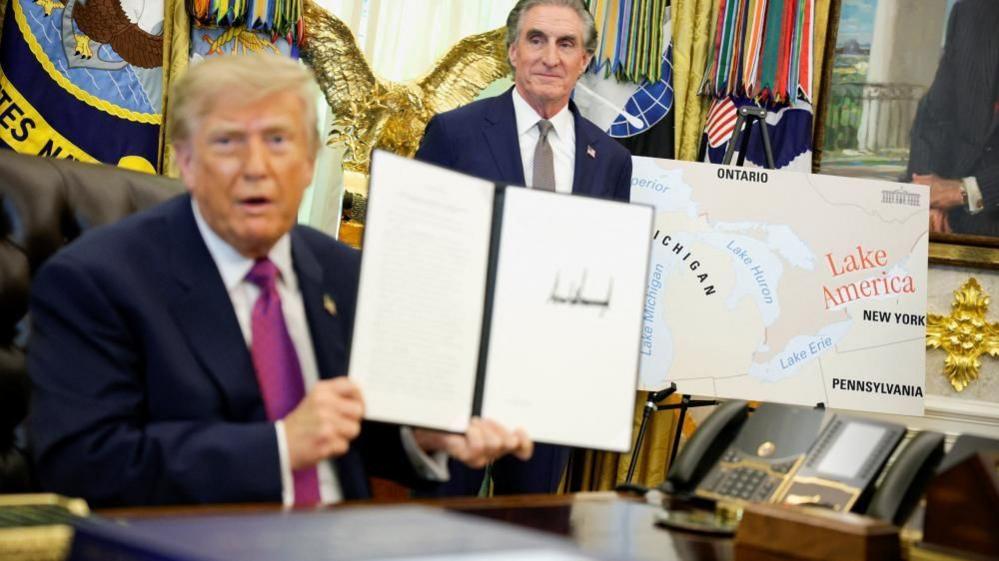
Donald Trump signed an executive order on Thursday changing the name of Lake Ontario to Lake America. The announcement came after trade talks with Canada collapsed and the U.S. imposed a 50% tariff on $20 bn of Canadian goods.
The order instructs the Department of the Interior to update the name in the Geographic Names Information Service within thirty days. Supporters cite the lake’s position as a symbol of American sovereignty, while critics argue it is an affront to Canadian heritage.
Canadian Prime Minister Mark Carney replied that the lake’s name, Lake Ontario, has existed for over four hundred years and would remain unchanged. The Canadian government also confirmed the launch of a “dollar‑for‑dollar” counter‑tariff next month.
The renaming is part of a broader pattern, with Trump previously altering the Gulf of Mexico’s name to Gulf of America in 2025. That change drew a legal battle with Mexico and was contested by Google Maps users in both countries.
Public reactions ranged from mockery to political action. Wisconsin Governor joked about calling Lake Michigan “Lake Wisconsin,” while New York Governor Kathy Hochul refused to adopt the new name. Democratic lawmakers in Michigan have introduced bills to nullify the order, describing it as “idiotic.”
The president emphasized that the main purpose of these changes is to align geographic names with the United States, but the move could backfire by damaging trade relations and diplomatic goodwill.
The decision has ignited an international debate about the authority of national leaders to rename bodies of water that lie on national borders.
Will the new name stick? Only time will tell as Canada continues to negotiate trade reform while both sides juggle symbolic gestures and substantive economic concerns.

