
In brief
A recent study highlights that naked mole rats, known for their unique appearance and long lifespan of almost 40 years, possess a specialized DNA repair system that could unlock secrets to longevity and disease resistance in humans. By examining the role of a protein called c-GAS, researchers at Tonji University in Shanghai explored how this adaptation has allowed naked mole rats to thrive while being resistant to cancer and other age-related ailments. The findings prompt further investigation into evolutionary biology and potential health applications for humans.
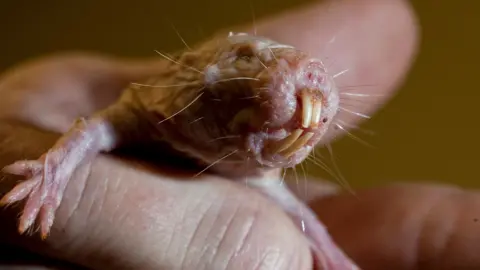
Naked mole rats are unique, bald, subterranean rodents that appear to defy the aging process. A recent study reveals that these creatures have evolved a fascinating DNA repair mechanism that contributes to their impressive longevity.
With a maximum lifespan of nearly 40 years, these rodents are the longest-lived among their kind. The insights from this groundbreaking research, published in the journal Science, may also shine a light on their unusual resistance to various age-related diseases.
Naked mole rats are notably resilient to conditions like cancer, brain degeneration, and arthritis, prompting continuous scientific interest in their biological functions. The study, conducted by a research team at Tonji University in Shanghai, focuses specifically on the mechanisms of DNA repair, which is crucial for maintaining genetic integrity within cells.
When DNA strands are damaged, a natural repair process commences, utilizing intact DNA strands as templates. A significant factor in this system is a protein called c-GAS, which typically inhibits DNA repair in humans, potentially promoting cancer and shortening lifespan. Conversely, the same protein in naked mole rats facilitates efficient DNA repair, thereby preserving their genetic material.
“The discovery is exciting and just the tip of the iceberg," said Professor Gabriel Balmus from the University of Cambridge, who studies aging and DNA repair. He described c-GAS as a biological 'Lego piece' that has evolved differently in naked mole rats, enabling it to perform a more beneficial role.
This research paves the way for better understanding the evolutionary adaptations of these remarkable rodents and raises critical questions about cellular repair processes in aging. The scientific community hopes that unraveling these secrets could inspire therapies aimed at enhancing health and longevity for humans.