Supreme Court upholds birthright citizenship, blow to Trump
In a 6‑3 decision, Chief Justice John Roberts reaffirmed that every child born on U.S. soil has the constitutional right to citizenship, rejecting President Trump’s effort to end the 150‑year‑old policy.
The ruling held that children born to parents unlawfully or temporarily present in the United States are citizens at birth, as guaranteed by the 14th Amendment.
Trump had sought to limit this right via an executive order, arguing that children of undocumented immigrants or temporary visitors were not “subject to the jurisdiction thereof” and therefore ineligible for birthright citizenship.
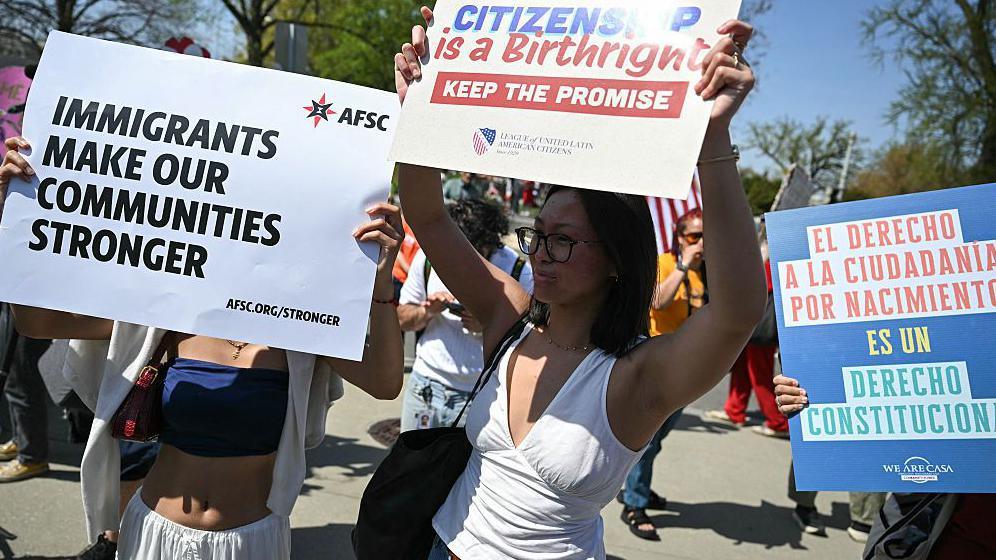
The court’s decision was a major setback for Trump’s immigration agenda and was welcomed by civil‑rights groups who celebrated the affirmation of a fundamental constitutional promise.
Minority opinions were issued by Justices Clarence Thomas, Neil Gorsuch and Samuel Alito, collectively arguing that the amendment should not be applied to children of non‑resident parents and characterizing the ruling as a “serious mistake.”
In a statement on Truth Social, the former president condemned the decision as “too bad” and vowed to continue fighting for legislation that would effectively end birthright citizenship.
The 14th Amendment, originally enacted to extend rights to recently freed slaves, still reads that “all persons born or naturalised, and subject to the jurisdiction thereof, are citizens of the United States.” This language forms the basis for the Court’s sustained protection of birthright citizenship.
Civil‑rights advocate Hakeem Jeffries praised the Court, saying the ruling “finally affirmed that all persons born in the United States are American citizens.”
Lawyers’ Committee Chief Counsel Dariely Rodriguez added that the decision “solidifies what we have known to be true for over a hundred years.”
The move triggers a renewed debate over immigration policy, while the Supreme Court clarifies its role in safeguarding constitutional guarantees.
Source: BBC News, 30 June 2026.