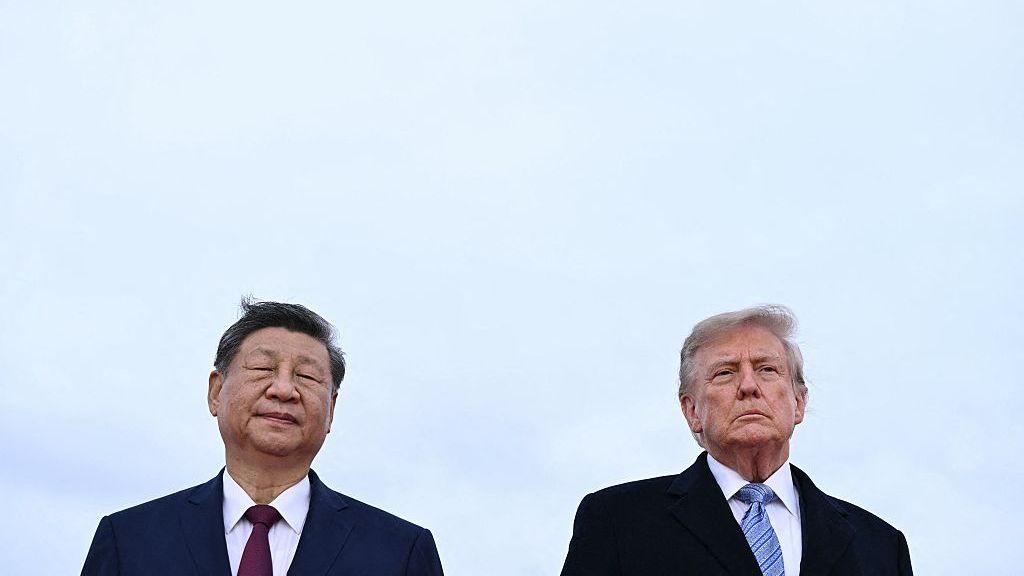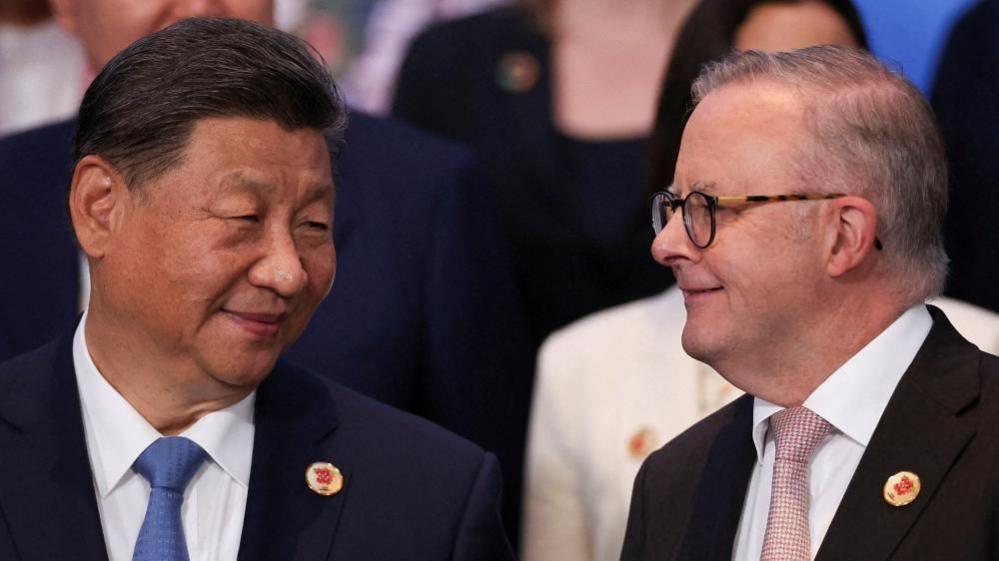
Australia is caught in a tight spot, forcing the nation to weigh its deep economic ties with China against a growing military alliance with the United States. While China’s military capabilities rise and its influence spreads across the Pacific, Australia has moved to deepen its defence cooperation with its long‑time ally and a superpower rival to Beijing.
Southern Jackaroo – a joint exercise involving Australian, U.S. and Japanese forces – is a clear signal of this shifting strategy. The drills , which simulate war‑zone conditions, have expanded significantly in scale, with the U.S. sending roughly 2,500 Marines to Australia for a six‑month deployment, compared with just 200 in 2012. The Australian National Defence Strategy explicitly warns that intense competition between the U.S. and China will define the region’s future.
The relationship with China, however, is not simply a security equation. China is Australia’s most important export market and, since the free‑trade agreement of 2015, has become the country’s largest trading partner. Yet the trade partnership has been tested: after a 2020 investigation into COVID origins, China imposed tariffs, and in 2021 Australia froze a state‑level Belt and Road Initiative contract. In 2026, China also slapped 55% tariffs on Australian beef, raising economic tensions.
Public sentiment reflects this complex reality. The Lowy Institute Poll found that 61% of Australians view China primarily as an economic partner, up 11 points from last year, but 51% now believe Australia’s relationship with China is more important than with the U.S. Only 31% trust the United States to act responsibly, and just 28% trust China in the same way.
“We are rehearsing for a war – a World War Two‑style war, a World War One‑style war, a total war,” says Brigadier Ben McLennan, preferring to remain vague on who the enemy is. The focus remains on readiness rather than a specific adversary.
On a diplomatic level, the divide is also pragmatic. While Australia has formally organised nuclear submarines through the Aukus partnership with the U.S. and the UK, it remains closely tied to China for trade and resources. The U.S. hovers in Australia’s defence framework – guaranteed by a right‑to‑remain provision and upgraded bases such as RAAF Tindal – while economic interdependence with China remains entrenched.
The transition of power between super‑powers has further complicated the issue. Former Prime Minister Kevin Rudd’s talk of “radical changes” in national security reflects the shift, and scholars argue the U.S. offers an unpredictable yet essential security partner, while China supplies essential commodity flows. Australia's policy has to balance both sides, as one cannot simply hand over the other.
With the U.S. and China driving global change, Australia will continue to navigate its position through a sophisticated balance of defence, diplomacy and trade – a strategy that acknowledges that “there’s no way Australia will choose one side and dump the other.”