
In brief
As South Korea prepares to host President Trump and President Xi, competing protests highlight public sentiment in a country caught between two major powers. While the government seeks to strengthen ties with both superpowers, opinions among citizens reveal a complex landscape of loyalty and resentment. The implications of these diplomatic meetings could reshape South Korea's future interactions and policies.
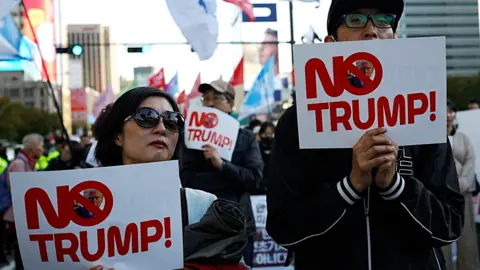
On a vibrant Saturday in Seoul, protestors vocally opposed the arrival of US President Donald Trump, chanting No Trump! while another group nearby held anti-China sentiments. This dual rally points to the diplomatic challenges faced by South Korea as it prepares to host leaders from both the US and China.
Seoul has long been a crucial ally of the United States, especially since the Korean War, and this relationship remains important for South Korean security. However, China stands as its largest trading partner, complicating South Korea's political landscape.
The challenge for President Lee Jae-myung is to navigate these competing pressures gracefully. Analysts suggest Lee is caught in a dilemma, trying to appease both countries amid rising nationalism and economic concerns from both the public and the government.
As Lee approaches this high-stakes diplomatic summit, he faces risks that could impact both economic prosperity and national security. With the backdrop of recent protests, there are signs of growing dissatisfaction regarding how South Korea manages its economic ties with both the US and China.
The tensions reflect a broader global trend, where countries are increasingly forced to choose sides between the two superpowers. President Lee's ability to pivot effectively between maintaining a strong relationship with the US while fostering a pragmatic approach towards China may define his administration.
While protests showcased concerns regarding both superpowers' influence, surveys indicate a lingering positive sentiment towards the United States among many South Koreans. Nevertheless, growing anti-China rhetoric presents challenges, particularly regarding historical animosities and economic policies.
Lee's diplomatic dance also involves dealing with complex domestic opinions, as citizens express their frustration over perceived inequalities and exploitation. As he seeks to strike a balance, the upcoming talks could illustrate the precarious nature of international relations in East Asia.
This week promises to be crucial for South Korea, with the potential for significant shifts in both economic and political discourse as Lee engages with two of the world's most powerful leaders.
}