
In brief
As Russia marks the 25-year anniversary of Vladimir Putin's ascent to power, the consequences of his leadership decisions are scrutinized, especially as the conflict in Ukraine prompts reflection on the nation's trajectory under his reign.
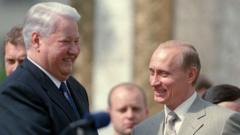
On December 31, 1999—an unforgettable New Year's Eve—President Boris Yeltsin stunned the world by resigning and passing the reins to Prime Minister Vladimir Putin, marking the beginning of a new era in Russian politics. That night, as a young BBC producer in Moscow, I rushed to report the news, highlighting Yeltsin’s unexpected decision and its implications for Russia's future. Yeltsin left Putin with a crucial directive: "Take care of Russia!" As we near the three-year mark since Putin's extensive invasion of Ukraine, one can't help but reflect on how well he has fulfilled that charge. The consequences of this war have been catastrophic not only for Ukraine—where lives have been claimed, cities devastated, and territory occupied—but also for Russia itself, grappling with military losses, international sanctions, and domestic unrest.Since the onset of the war, Russian towns have faced drone assaults, Ukrainian forces hold parts of Russia's Kursk region, and the economy faces mounting challenges. Compounded by a dire demographic crisis and increasing domestic repression, many question the stability and future of Putin's Russia. Having covered Putin's leadership journey for 25 years, I ponder how different the narrative could have been had Yeltsin chosen a different successor. Could Russia have taken a different path? It's a haunting notion. Former NATO chief Lord Robertson recalls a stark transformation in Putin over the years. The promising leader he once knew morphed into a figure driven by ambition and a desire to restore Russia's great power status post-Cold War. Rather than conciliating with the West, Putin’s actions have now led to an inevitable clash, showcasing a fragile ego and an enduring sense of grievance against a world that he perceives has disregarded Russia's sovereignty.In the midst of this turmoil, I seized the opportunity during a lengthy press conference to put forth a challenging question to Putin: Did he believe he had "taken care" of Russia amid the ongoing turmoil he had created? His firm assertion of success contrasted sharply with the evident challenges facing the nation. Putin claimed that he had not only cared for Russia but had also steered it away from disaster, portraying the current geopolitical climate as a struggle for sovereignty against a patronizing West. It's debatable, however, whether his viewpoint is a genuine perspective or a retrospective rationale aimed at justifying the war in Ukraine.Ultimately, the implications of his belief—or lack thereof—in his own governance may dictate the conflict's resolution and the future of Russia. The complexities of national identity, statehood, and international relations remain pivotal as the global community watches closely. As we consider possible pathways ahead, the fundamental question lingers: has Putin truly cared for Russia?
