
In brief
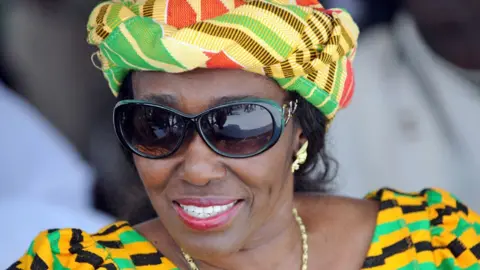
Nana Konadu Agyeman-Rawlings, the former First Lady of Ghana and widow of the late President Jerry John Rawlings, has died at 76. Recognized for her activism in women's rights and her role in Ghanaian politics, she significantly impacted the nation through initiatives aimed at empowering women and revising gender laws. Her passing has sparked widespread tributes from the community and politicians.
Nana Konadu Agyeman-Rawlings, Ghana's former First Lady, has passed away at the age of 76. Known for her advocacy for women's rights and her involvement in political activities, she was a significant figure in Ghana's social and political landscape.
She was the widow of Ghana's longest-serving leader, Jerry John Rawlings, who died five years prior. Her passing on Thursday morning from a short illness was confirmed by Felix Kwakye Ofosu, a spokesman for the presidential administration.
Social media is currently filled with tributes honoring Agyeman-Rawlings, who was more than just a political spouse; she was a formidable politician in her own right, even running for the presidency in 2012 as a candidate for the National Democratic Congress (NDC), the party founded by her late husband.
Throughout her time as First Lady, she famously established the 31st December Women's Movement aimed at empowering women economically and socially, named after the date of her husband's second coup in 1981. The movement played a crucial role in enhancing the lives of women throughout Ghana, particularly in poorer regions.
Agyeman-Rawlings also influenced Ghanaian law, advocating for women's inheritance rights in 1989 and contributing to constitutional provisions for gender equality in Ghana's 1992 constitution, which reinstated multiparty democracy.
Born in November 1948 in Cape Coast, she grew up in a middle-class family and pursued her education in art and textiles, achieving a university degree when many women did not at that time.
As a dynamic duo, she and her husband were often highlighted as glamorous and charismatic leaders, though their time in power also faced criticism. Their legacy is complex yet significant, especially regarding women's inclusion in Ghanaian politics.
In light of her death, Ghana's parliament has suspended sessions to honor her memory, a testament to her influence and the respect she garnered throughout her life.