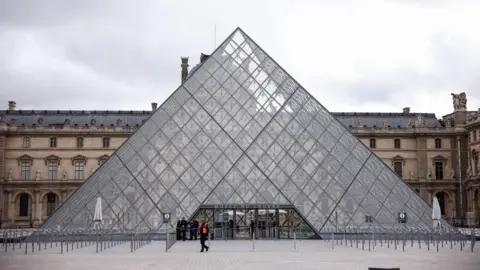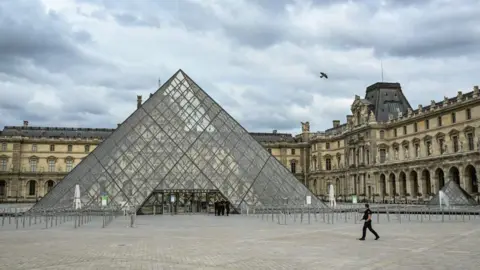
A water leak at the Louvre has caused damage to a 19th Century ceiling painting, in the latest major setback for the Parisian museum. Water damage was discovered in room 707, also known as the Duchâtel room, late on Thursday night, the museum said. The room houses multiple 15th and 16th Century artworks.
The museum mentioned that the leak, emanating from a heating pipe, was stopped shortly after midnight, with only Charles Meynier's 'The Apotheosis of Poussin, Le Sueur and Le Brun' suffering damage. This incident comes just a day after French police reportedly detained nine individuals, including two museum staff members, over a suspected ticket fraud scheme.
Museum directors have faced increased scrutiny in recent months, especially following the brazen theft of priceless French crown jewels from the museum in broad daylight and another leak that damaged hundreds of books. The Louvre confirmed that Thursday's leak occurred at the entrance to the paintings department in the Denon wing and that firefighters responded immediately, halting the leak approximately 40 minutes after it began.
A painting restorer assessed Meynier's ceiling painting the following morning and found it had developed two tears in the same area caused by water, and the paint on the ceiling and its arches had lifted. The ceiling painting, completed by Meynier in 1822, depicts celebrated French painters Nicolas Poussin, Eustache Le Sueur, and Charles Le Brun among angelic figures in the clouds.
Rooms 706, 707, and 708 in the Denon wing were closed on Friday morning but are expected to reopen later in the day. The chief architect of historic monuments evaluated the ceiling's condition and reported that there were no structural issues.
However, the costs associated with the damage to the painting and the building are still unclear. This leak is part of a troubling series of issues at a museum, which remains the most visited in the world. Just in December, 300-400 pieces, mainly books, were damaged due to a leak in the museum's Egyptian department. The museum's deputy administrator had acknowledged that the problems causing these leaks had been known for years.
The month prior, structural weaknesses led to a partial closure of galleries housing Greek vases and offices. Adding to the museum's woes, in October, a high-profile heist saw four burglars absconding with historic jewelry worth €88 million, exposing significant weaknesses in the museum's security. Following this incident, many of the stolen items remain unrecovered, with the museum relocating some of its most prized jewels to ultra-secure facilities at the Bank of France.
Amidst these challenges, a report released by France's public audit body criticized the museum's excessive expenditure on art, suggesting it detracted from necessary maintenance and renovation of the facilities.
The museum mentioned that the leak, emanating from a heating pipe, was stopped shortly after midnight, with only Charles Meynier's 'The Apotheosis of Poussin, Le Sueur and Le Brun' suffering damage. This incident comes just a day after French police reportedly detained nine individuals, including two museum staff members, over a suspected ticket fraud scheme.
Museum directors have faced increased scrutiny in recent months, especially following the brazen theft of priceless French crown jewels from the museum in broad daylight and another leak that damaged hundreds of books. The Louvre confirmed that Thursday's leak occurred at the entrance to the paintings department in the Denon wing and that firefighters responded immediately, halting the leak approximately 40 minutes after it began.
A painting restorer assessed Meynier's ceiling painting the following morning and found it had developed two tears in the same area caused by water, and the paint on the ceiling and its arches had lifted. The ceiling painting, completed by Meynier in 1822, depicts celebrated French painters Nicolas Poussin, Eustache Le Sueur, and Charles Le Brun among angelic figures in the clouds.
Rooms 706, 707, and 708 in the Denon wing were closed on Friday morning but are expected to reopen later in the day. The chief architect of historic monuments evaluated the ceiling's condition and reported that there were no structural issues.
However, the costs associated with the damage to the painting and the building are still unclear. This leak is part of a troubling series of issues at a museum, which remains the most visited in the world. Just in December, 300-400 pieces, mainly books, were damaged due to a leak in the museum's Egyptian department. The museum's deputy administrator had acknowledged that the problems causing these leaks had been known for years.
The month prior, structural weaknesses led to a partial closure of galleries housing Greek vases and offices. Adding to the museum's woes, in October, a high-profile heist saw four burglars absconding with historic jewelry worth €88 million, exposing significant weaknesses in the museum's security. Following this incident, many of the stolen items remain unrecovered, with the museum relocating some of its most prized jewels to ultra-secure facilities at the Bank of France.
Amidst these challenges, a report released by France's public audit body criticized the museum's excessive expenditure on art, suggesting it detracted from necessary maintenance and renovation of the facilities.