In brief
A heavy monsoon surge triggered a massive landslide at a girls’ school inside Bangladesh’s largest Rohingya refugee settlement, Cox's Bazar, swallowing the building and killing eight people. Rescue workers pulled 13 people out of the mud, but most could not survive. The debris‑filled tract sits on steep slopes that become highly unstable during prolonged rainfall. While the incident is the latest in a series of deadly landslides the region has seen, officials warned that further rains could worsen the situation, prompting evacuation orders in vulnerable communities.
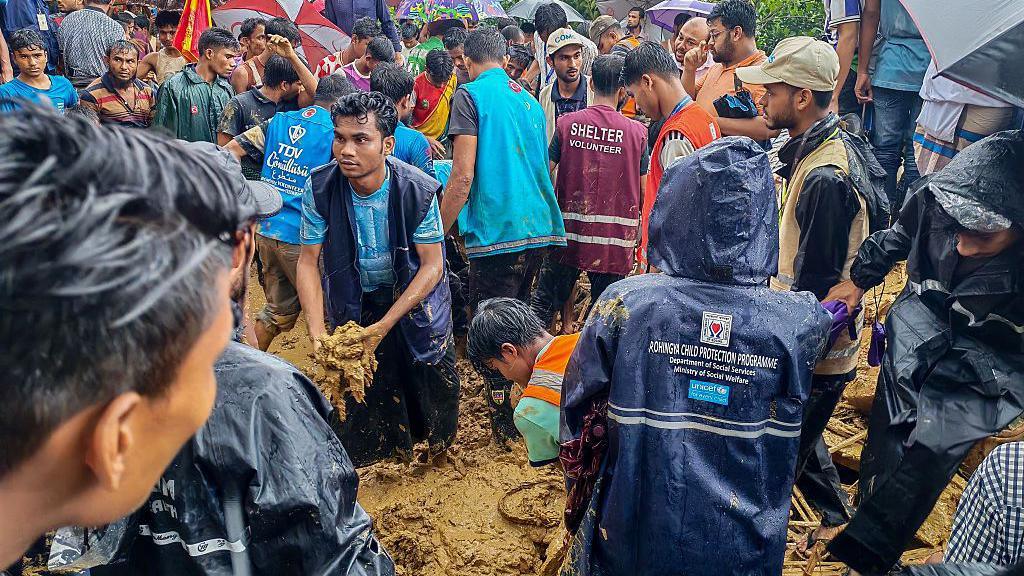
On Wednesday afternoon, torrential monsoon rains triggered a devastating landslide that buried a girls’ school in the largest Rohingya refugee camp in Bangladesh’s coastal city of Cox's Bazar. Seven students and a teacher lost their lives when the building was swallowed by mud and debris.
Rescue crews retrieved 13 people from the mud, but only five survived—most were children aged between seven and twelve, according to a local district officer. The remaining victims were taken to hospitals for emergency treatment.
The school belonged to an Islamic study centre inside the camp. The disaster occurred amid a series of deadly landslides in the area, as rivers and riversides swell during the monsoon season and steep hillsides give way.
Over a million Rohingya refugees—who fled Myanmar’s military crackdown in 2017—currently live in makeshift shelters made of tarpaulin and bamboo on precarious slopes. Many endure poor living conditions and are at risk when heavy rains strike.
Authorities have warned of more floods and landslides, and are evacuating families in high‑risk sites. This tragedy underscores the urgent need for stronger infrastructure and emergency preparedness in refugee communities.