Indians Dive Into Virtual Food Frenzy With ‘FoodNeverComes’
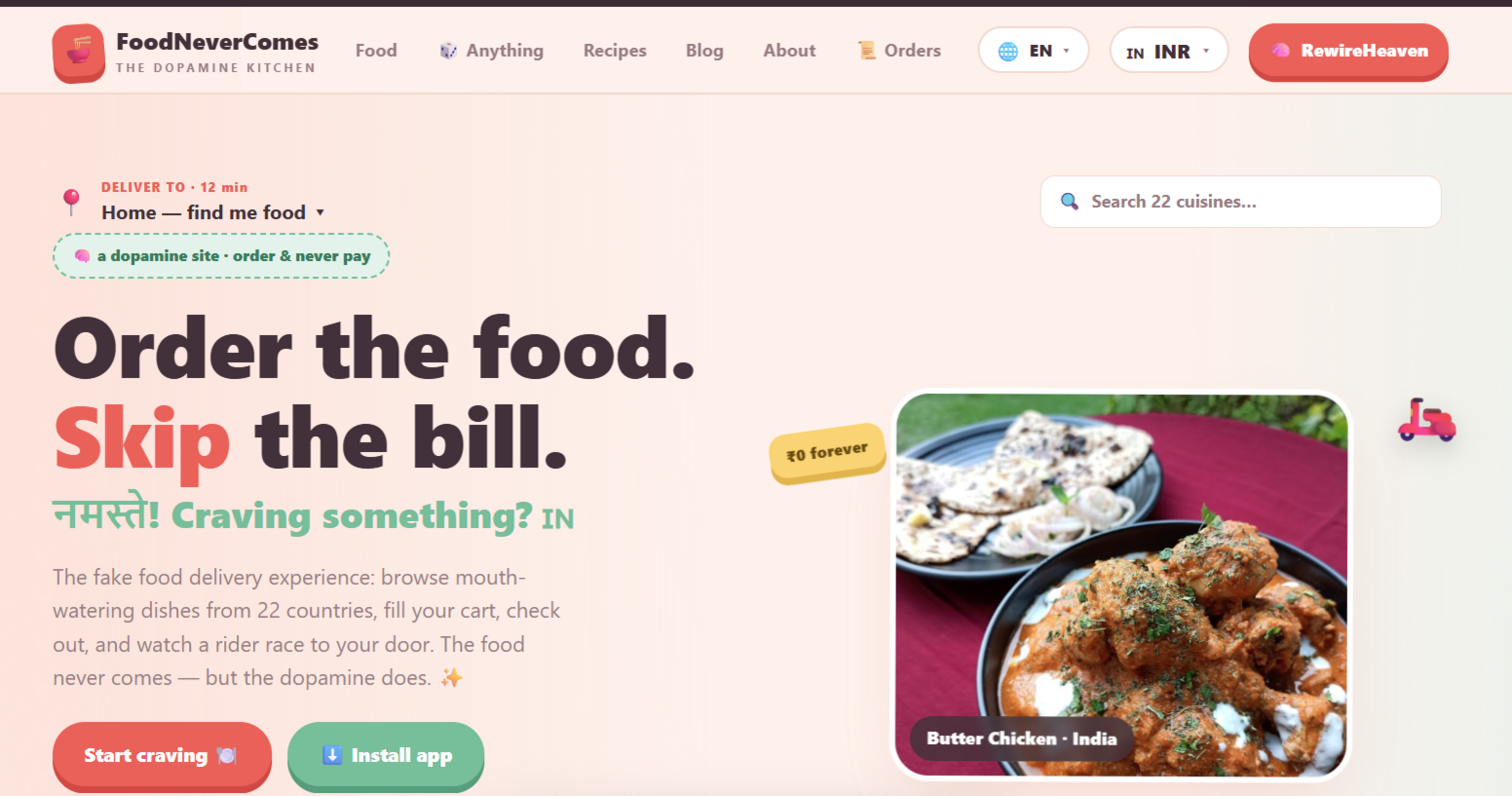
FoodNeverComes, a startup built by two 26‑year‑olds from Udaipur, lets you pick dishes from 22 fake kitchens, add them to a cart and check out—all without ever receiving a meal.
Since its June launch it has attracted more than 2.7 million visitors. The web‑site calls itself a 'dopamine kitchen' and its slogan is "The food never comes – but the dopamine does".
How the site works
Using a simulated order counter, the site displays a list of dishes with made‑up prices and a pretend rider update. When you hit Checkout you get a voice‑call example saying “Your order is on its way” even though nothing is actually en route.
All menus are fictional; there are no real restaurants, no real deliveries, and no real money exchanged. Still, the platform mimics the shopping‑cart ritual that many users find addictive.
The dopamine driving force
Experts in neuroscience note that shopping is often driven by “anticipatory utility”—the pleasure you feel while looking forward to a purchase, not necessarily the enjoyment of owning it. For the founders, the desire to order food arose from their own habit of filling online baskets and forgetting to check out.
Knowledge of dopamine’s role shows that it fuels the wanting or motivational pull toward the online item. Once the purchase is obtained the “wanting” fades, and what remains is a diminished pleasure or “liking” of the item.
Beyond food: the broader dopamine‑site ecosystem
FoodNeverComes is part of a growing class of “dopamine sites” that replicate various consumption rituals without the real payoff. Examples include Dopamine Shop and Fakehaul. These sites offer fake shopping experiences, holiday bookings and even mock exercise plans.
Such practices raise questions about the mental health impact of simulating consumption, and whether repeated engagement reinforces the very neural pathways that underlie compulsive buying.
Safety nets and future intentions
The founders say the sites are free and aren’t meant for profit. They are collecting data to share with neuroscientists and psychologists, hoping it might shed light on how digital rewards shape behavior.
While the virtual experience might help some users confront their buying impulses, studies warn it could also simply rehearse problematic habits. The debate continues as more people experiment with “real‑world‑less” shopping and ordering.