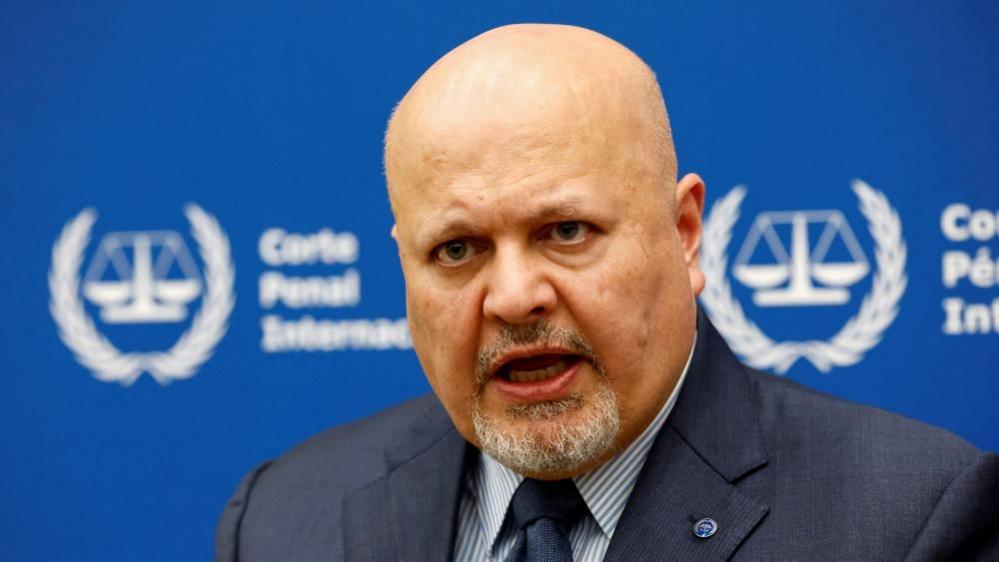
Members of the International Criminal Court (ICC) have voted to remove Karim Khan as chief prosecutor after an investigation uncovered allegations of sexual misconduct involving a junior staff member and an attempt to suppress her complaint.
Elected as the ICC’s third prosecutor in 2021, Khan had been suspended earlier this year. The decision to dismiss him was approved by 82 votes in favour.
The Independent Oversight Mechanism found that Khan had committed a "serious breach of duty and serious misconduct" by engaging in an improper sexual relationship with a staffer and then seeking to prevent her from pursuing a complaint.
Khan has consistently denied all allegations. His lawyers argue that the suspension was "unlawful, procedurally unfair and unsupported by evidence".
The removal has implications beyond the career of one individual, potentially reshaping the world’s sole permanent war‑crimes tribunal.
Investigations into Khan’s conduct have brought the ICC under intense scrutiny, deepened internal divisions, and unfolded alongside a broader campaign to weaken or dismantle the court.
Critics fear the institution will emerge weakened, less able to confront the most severe global threats.
After being placed on voluntary leave to contest the claims, Khan has been banned from practising law in the UK by the Bar Standards Board, which is conducting its own inquiry.
Khan could not attend the vote held at the United Nations headquarters in New York because U.S. sanctions keep him barred from entry, a restriction imposed after he sought arrest warrants for Israeli leaders in Gaza.
Even with his removal, the controversy is unlikely to end. The process involved a sensitive review that has subjected the court to heightened scrutiny.
The first report of allegations surfaced in May 2024, when a third party informed the ICC of Khan’s alleged sexual misconduct. The Independent Oversight Mechanism opened an inquiry but closed the case after the alleged victim declined to participate.
Critics of the procedure pointed to mishandling that eroded confidence in the Mechanism. Investigators concluded that evidence was insufficient to substantiate the claims.
A second referral was made in October 2024. The investigation was then handed to the United Nations Office of Internal Oversight Services (OIOS), which conducted a thorough examination of misconduct and abuse of authority allegations.
The OIOS investigation, running from November 2024 to December 2025, compiled more than 5,000 pages of evidence and testimony.
Afterward, a panel of three judges reviewed the findings to determine if Khan’s conduct amounted to serious misconduct, less serious misconduct, or no misconduct.
The allegations arose amid heightened pressure on the ICC, coinciding with significant geopolitical tensions.
The United States imposed sanctions on Khan after his pursuit of arrest warrants for Israeli officials over alleged war crimes linked to the Gaza conflict.
Washington’s stance toward the court has grown increasingly hostile. Earlier this month, the U.S. launched a “whole‑of‑government” campaign to dismantle the ICC, promising visa bans, asset freezes, and diplomatic pressure on allies to withdraw from the court or reject its jurisdiction over their nationals.
Although the United States, Russia, and Israel are not ICC members, the court can exercise jurisdiction over crimes committed by their nationals on the territory of ICC member states.