Europe’s Heatwave: Record-Breaking June Shocks Climate Scientists
June’s weather was far from ordinary. Across the UK and continental Europe, temperatures shattered historic highs, with the UK’s Lingwood in Norfolk reaching a scorching 37.7 °C, the highest June reading since 1957 and beat the previous 35.6 °C record by over 2 °C.
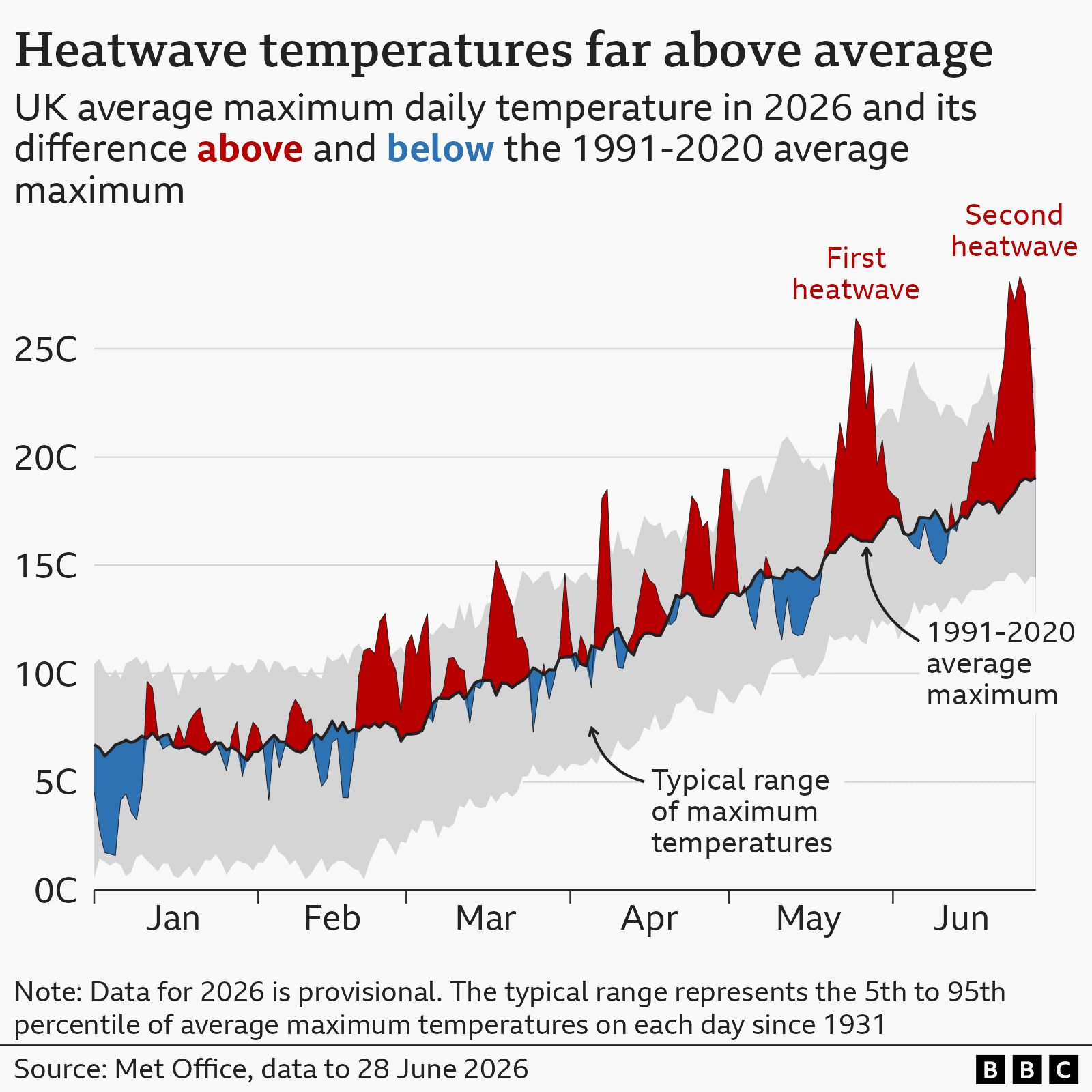
The heat spanned almost all of the UK, with 170 weather stations posting new June highs, especially in southern England and south Wales. In the UK average, a map of through‑June temperatures shows red‑shaded areas where temperatures exceed long‑term averages by as much as 10 °C, while blue zones—now rarer—indicate cooler-than-normal days.
The European spread was equally alarming. Germany, Italy, the Netherlands, Belgium, Switzerland and Hungary all recorded June highs above 40 °C, with Hungary reaching 42 °C and Hungary’s 42 °C record exceeding the previous 40 °C-peak by a full 2 °C. French alpine stations hit 39 °C, surpassing their June record by more than 2 °C.
High humidity added to the oppressive feel: the combination of heat and moisture left the body’s sweat‑cooling system struggling, and summer nights stayed above 23 °C in Cardiff—never before seen in a June night—while many towns across England and Wales recorded tropical nights (temperatures never dropping below 20 °C).
Scientists explain that these extremes are “human‑induced”: the persistent warming from greenhouse gases creates a higher baseline, so a high‑pressure system that would have produced milder heat a decade ago now spawns far hotter temperatures. Professor Ed Hawkins notes that “small increases in baseline temperatures” can lead to “dramatic jumps” in extreme events.
The warming of Europe’s seas also played a role. Marine heatwaves in the North Sea, Mediterranean, and Norwegian Sea tops have topped 1‑2 °C above their long‑term averages, which dampens the usual cooling effect of sea breezes and keeps atmospheric temperatures elevated.
These events are not isolated. While the next heatwave could be less intense or follow the same pattern, the long‑term trend remains clear: average summer temperatures will continue to rise unless global emissions are drastically curtailed. In the words of climate scientist Stephen Belcher, “our heatwaves will get hotter and hotter until we reach net‐zero greenhouse gas emissions.”
The visual evidence—a detailed graphic of June’s UK temperature record, high‑resolution maps of record‑breaking stations, and an illustration of European sea‑surface temperatures—illustrate the scale of the heatwave. The link between the record temperatures and contributing factors makes it clear that climate change has already shifted Europe’s climate from historic baselines to a new, hazardous reality.